
2026/10/08

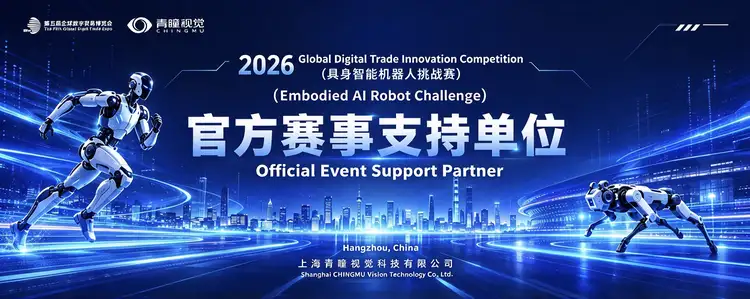
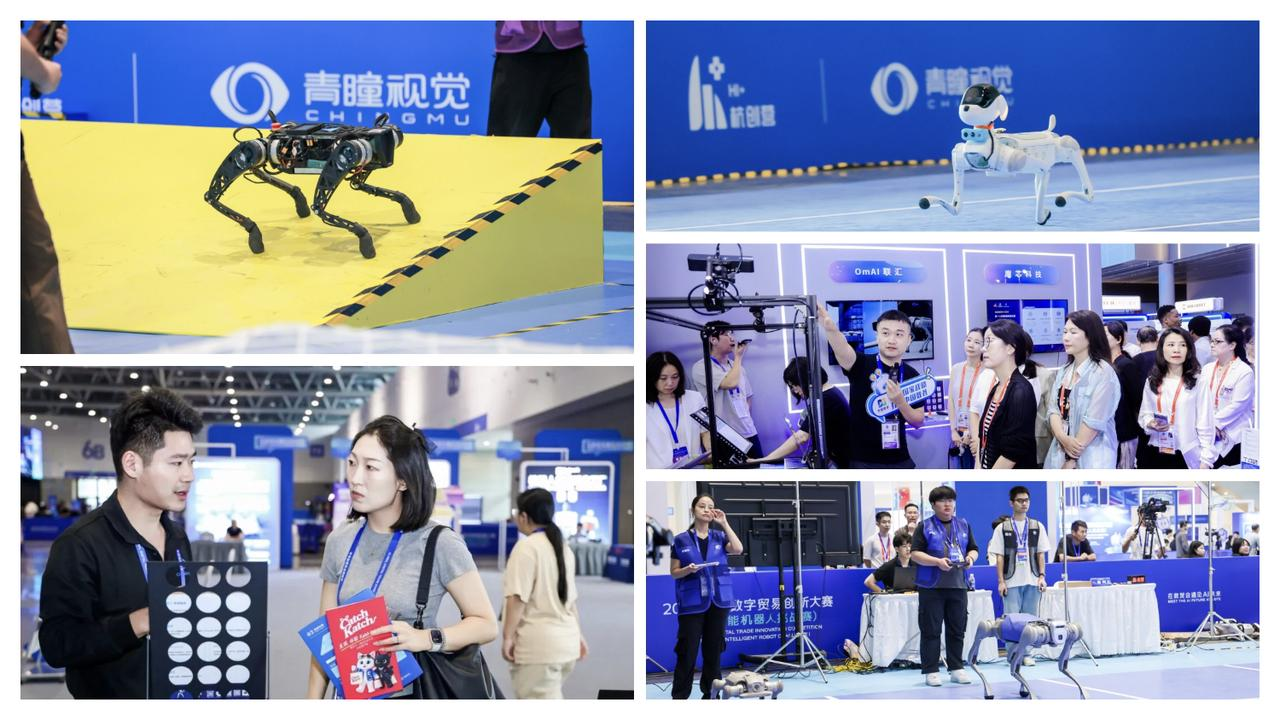
On September 23, the 5th Global Digital Trade Expo opened at the Hangzhou Grand Convention and Exhibition Center. In parallel, the 2026 Global Digital Trade Innovation Competition (Embodied AI Robot Challenge) officially kicked off, with over a hundred teams competing across 14 featured events, including the 100m sprint, shuttle run, obstacle course, robot soccer, tug-of-war, and spot shooting.
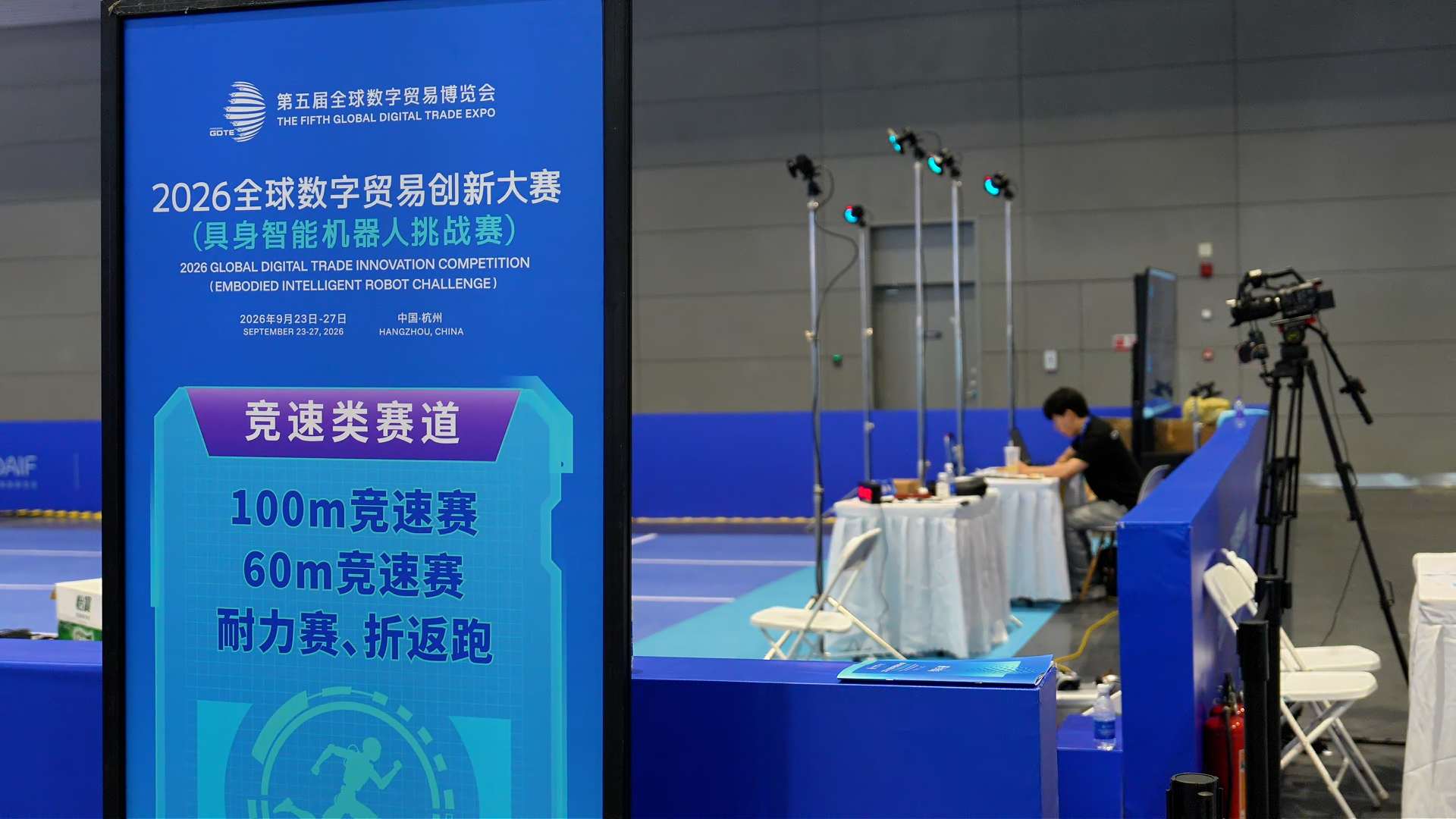
On the field, quadruped robots sprinted at high speed while humanoid robots leapt and maneuvered. Along the trackside, CHINGMU's optical motion capture system continuously recorded the robots' spatial positions and motion trajectories. When robots truly enter a competitive arena, simply "seeing them complete a movement" is no longer enough.
How far did it run? How many round trips did it complete? How long did it sustain motion? What exactly was its maximum jump height?
These metrics, which directly determine competition results, require a "ruler" that is accurate and stable enough.
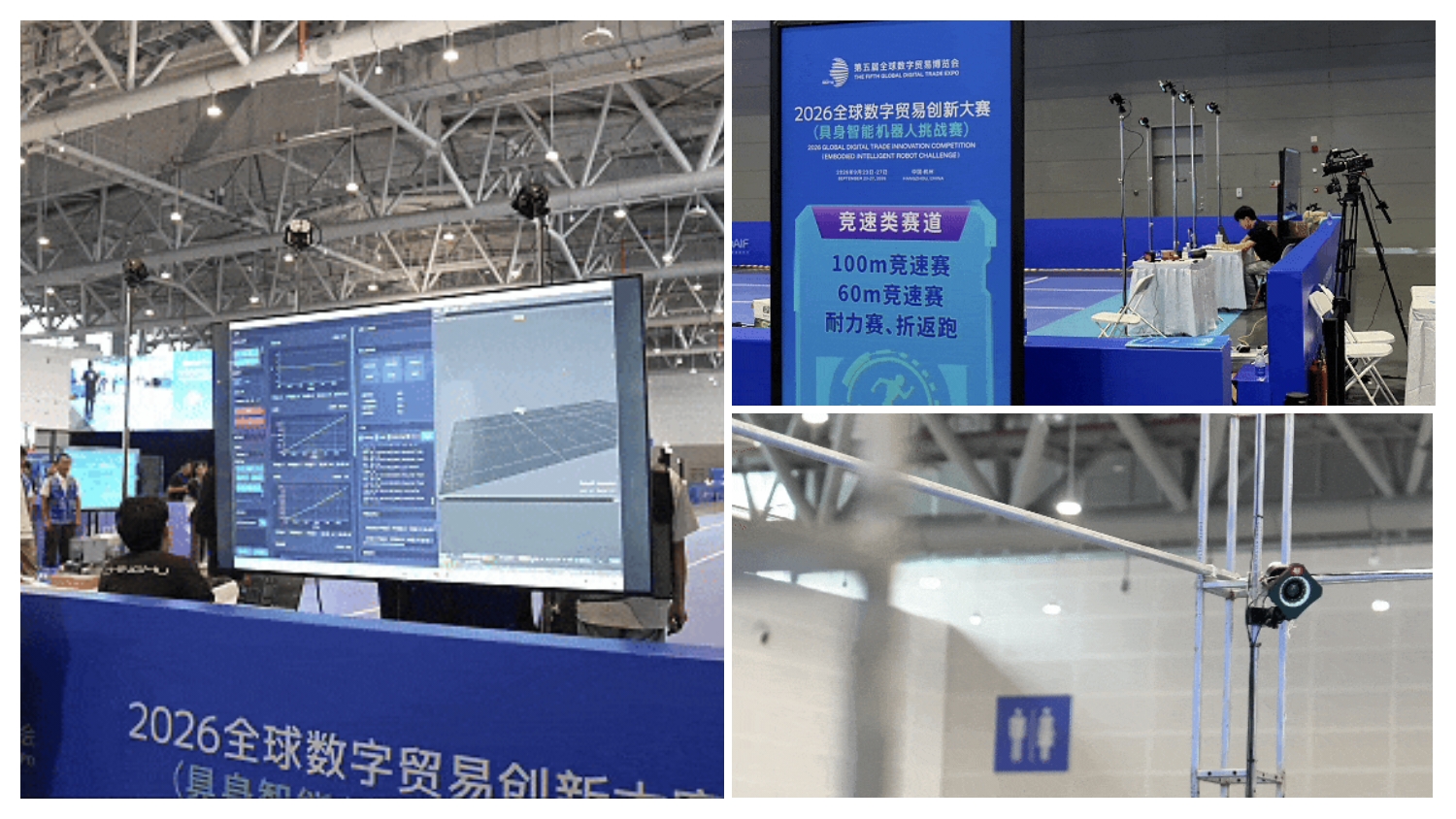
As an event support partner, CHINGMU stepped up as the competition's "electronic referee" with its self-developed high-precision optical motion capture system, converting robot motion in real time into quantifiable 3D data and providing an objective, precise measurement basis for competition scoring.
Part 01
The "Electronic Referee" on Duty: Giving Robot Competitions an Objective "Ruler"
Using optical mocap cameras deployed around the competition field, CHINGMU's motion capture system continuously tracks the robots' spatial positions and motion trajectories, converting real-world motion into computable, quantifiable data.
From "seeing the robot move" to knowing exactly how far it ran, how many round trips it completed, how long it sustained motion, and how high it jumped — this data then feeds directly into the competition scoring pipeline.
Competition rules define what is being compared; high-precision measurement is responsible for measuring it accurately.
And this "digital ruler" first faced a six-hour test.
Six Hours Online: Recording Every Round Trip of the Quadruped Robots
In the "6-Hour 100m Shuttle Endurance Race," competing quadruped robots had to continuously run back and forth along a 100-meter track. Data such as the number of round trips, distance traveled, and sustained motion time are used to assess their endurance and continuous motion capabilities. For a robot, how long it can keep going is itself part of the competition.
But for the system responsible for measuring results, running stably for over six hours is a baseline requirement that must be met.
Throughout the race, CHINGMU's optical motion capture system continuously tracked the position and motion trajectories of the competing quadruped robots, recorded key turnaround points, and tallied competition data including round-trip count, distance traveled, and sustained motion time — providing an objective measurement basis for final scoring. Robots might stop at different times, but the measurement system must operate continuously and stably from the very start, fully recording the real motion throughout the entire process.
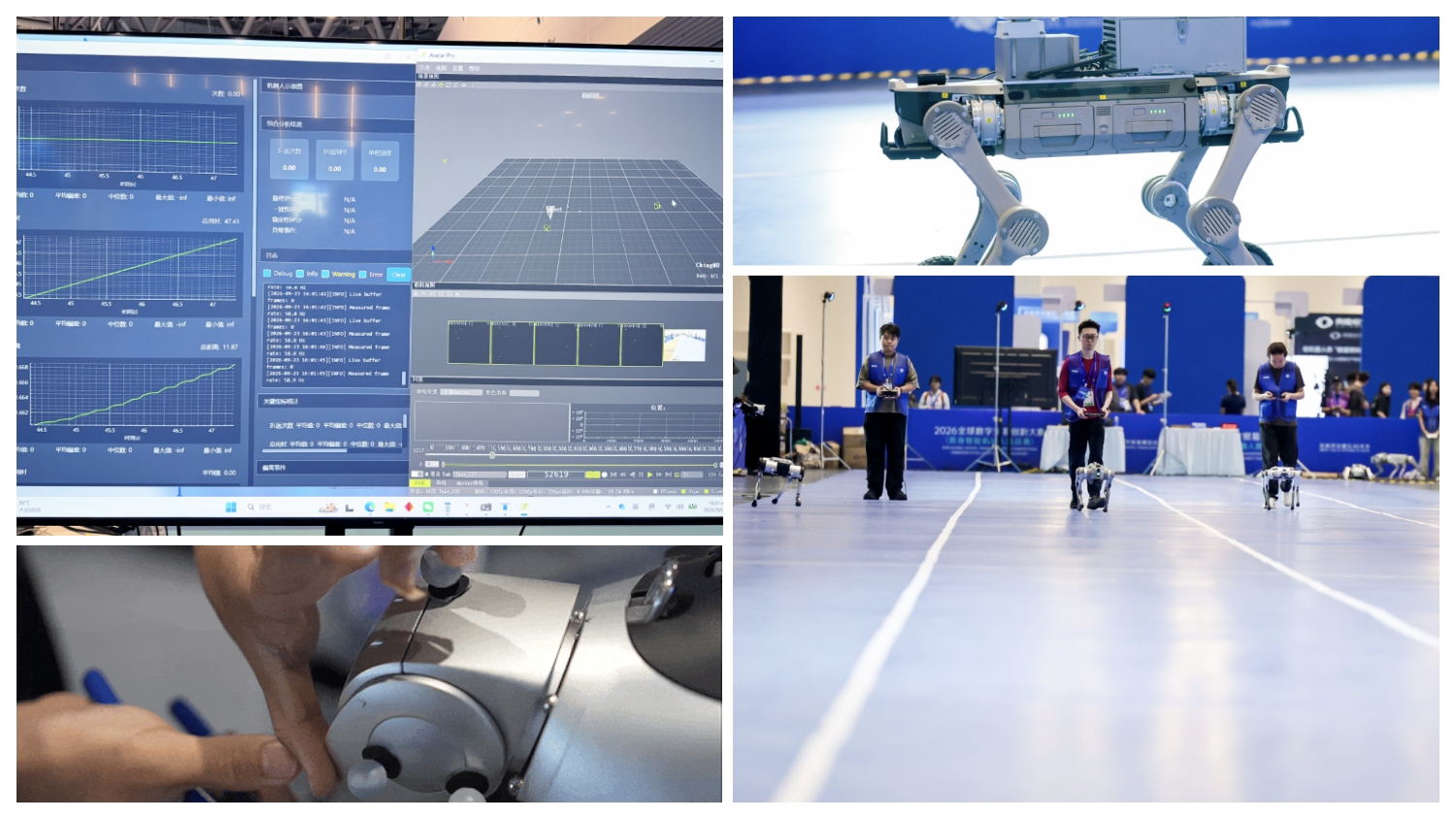
From the first turnaround to the final stop, every segment of motion is traceable through data.
A robot can stop — but the "electronic referee" cannot go offline.
Leaping Up: How High Did the Robot Actually Jump? Measured in Real Time
If the 6-hour endurance race tested sustained, stable measurement, then the humanoid robot standing high jump brought the "electronic referee" into an entirely different high-dynamic scenario.
On September 25, the humanoid robot standing high jump event of this competition officially began.. From pushing off the ground and taking off to becoming airborne, the entire process happens within an extremely short window of time.
Where exactly does the peak occur? How high did the robot actually leave the ground? It is nearly impossible to accurately reconstruct the entire motion process with the naked eye alone.
In accordance with competition rules, CHINGMU's optical motion capture system tracked the robot's 3D positional changes throughout the jump in real time, displayed its height above ground, and recorded the maximum jump height — providing high-precision measurement data for competition scoring. From takeoff, to airborne, to peak height, every moment of the robot's height change was continuously recorded.
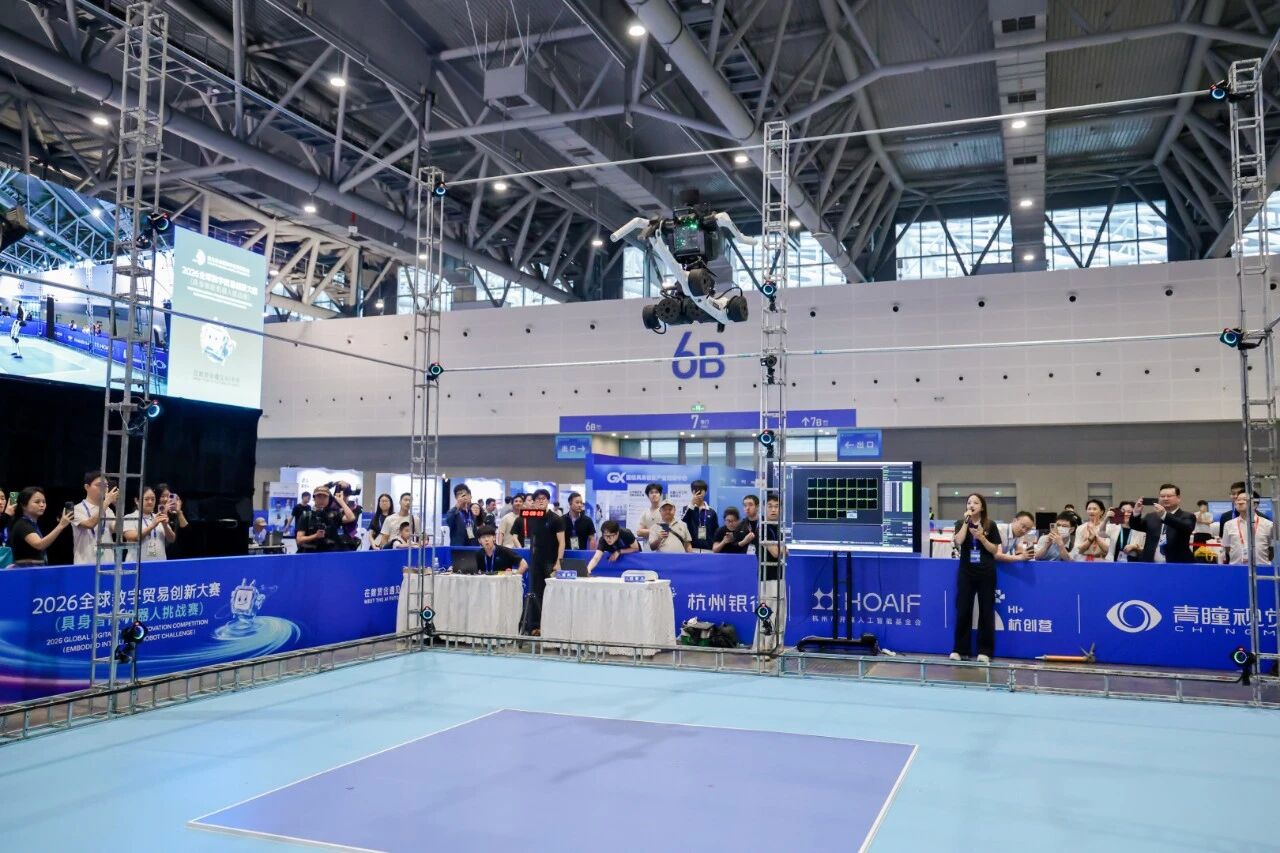
How high a robot actually jumps is no longer judged by "watching" alone — it is measured in real time, transforming the motion performance defined in competition rules into data that can be accurately measured.
Part 02
RoboEval: Building an Objective Ruler for Robot Motion Performance
The "electronic referee" on the competition field is just one application of high-precision motion measurement.
When robots move from the competitive arena into R&D testing and real-world applications, the same questions must still be answered: How well is the robot actually performing? How far does it deviate from the target motion? Is execution consistent across repeated runs? And after an algorithm upgrade, how much has real-world motion performance actually improved?
This has pushed high-precision motion capture beyond "capturing motion" toward reliably "measuring motion" — not only recording what a robot did, but providing an objective basis for verifying how well it actually did it.
On the competition field, it serves as a "digital ruler" for scoring. In robot R&D, the same external measurement capability can become the objective foundation for motion analysis, algorithm validation, and capability optimization.
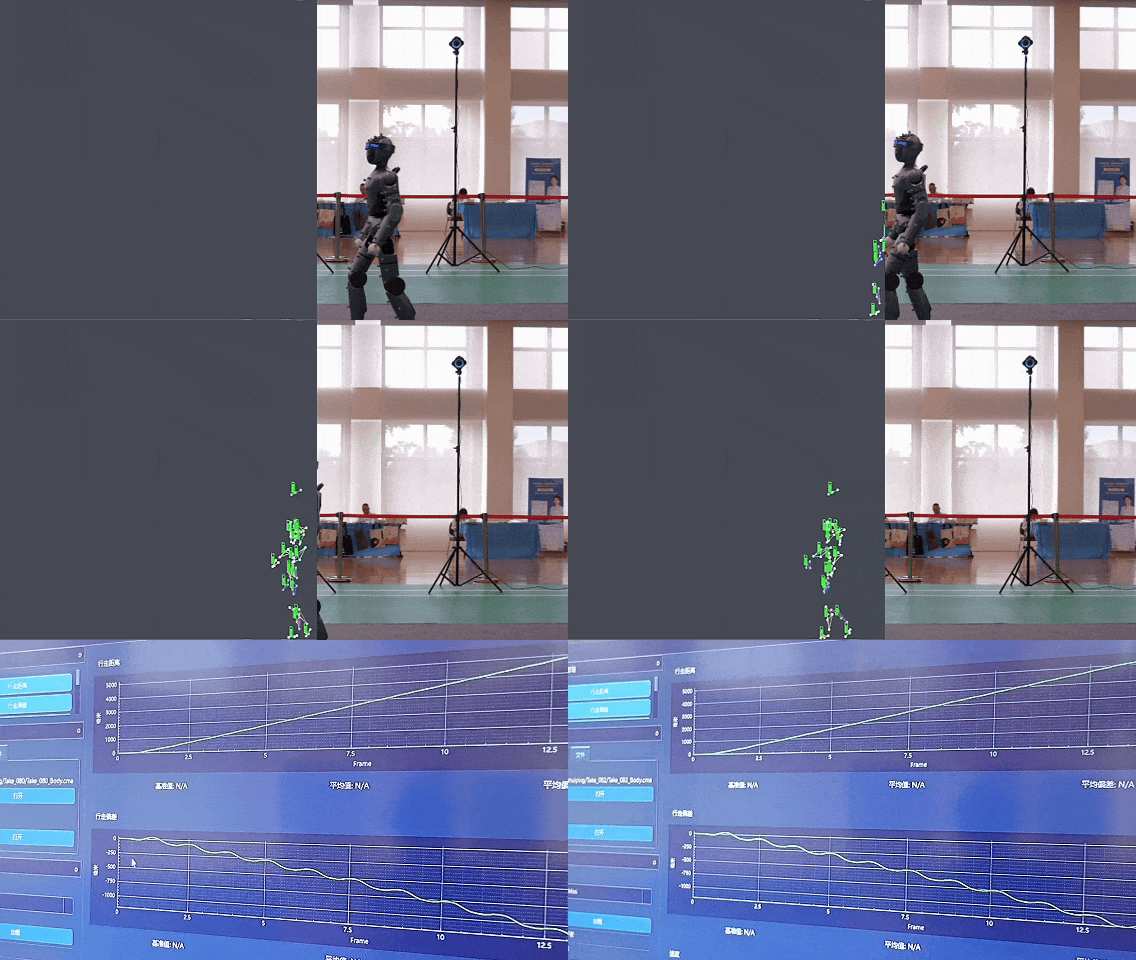
Building on high-precision optical motion capture and robot motion analysis capabilities, CHINGMU has further developed the RoboEval Robot Motion Evaluation Platform. Rather than simply giving a robot "a score," it is grounded in independent external motion measurement — recording, analyzing, and quantifying the robot's actual execution process, making robot motion performance:
measurable · quantifiable · comparable · verifiable.
By analyzing data such as motion trajectories, position and posture, velocity, and repeatability across multiple executions — and combining this with specific test tasks — RoboEval helps R&D teams answer three further questions:
How well is the robot actually performing?
What is the gap between actual performance and the target?
Which steps still need further optimization?Evaluation is not the endpoint of the robot learning pipeline.
It is both a validation of results and a starting point for the next round of training and optimization.
Part 03
Beyond the Arena: From Real-World Data Acquisition to Robot Motion Validation
During this year's Global Digital Trade Expo, CHINGMU showcased popular products including ProjectDecode and RoboEval on-site.
Among them, the ProjectDecode multimodal high-quality data acquisition system — jointly presented by CHINGMU and EnDecodeX — drew significant attention. Focused on relatively fixed operational scenarios such as workstations and production lines, the system integrates optical, inertial, tactile sensing, and video technologies to enable one-stop synchronized acquisition of motion, video, tactile, object, and environmental data in real-world settings — helping enterprises and research institutions efficiently build high-quality, multimodal, and reusable Embodied AI datasets.
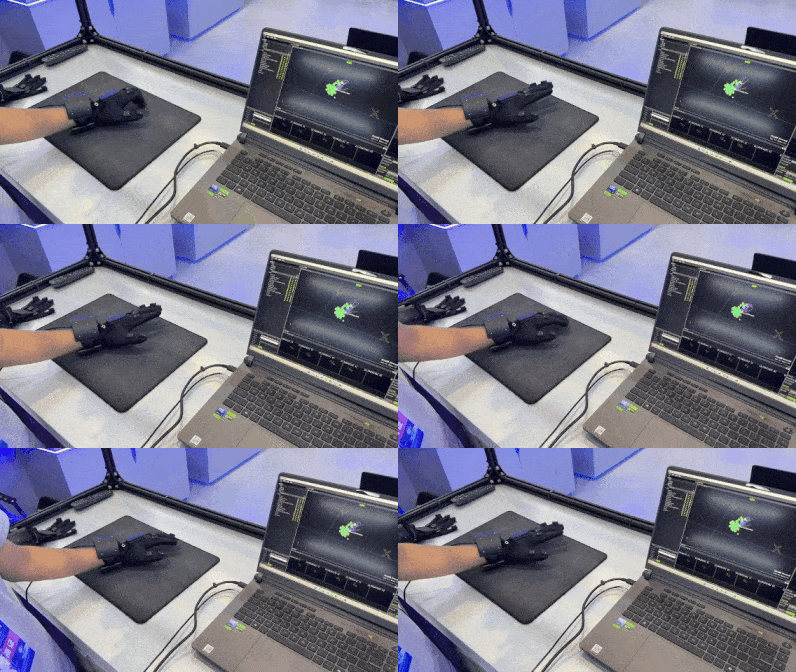
The RoboEval Robot Motion Evaluation Platform, meanwhile, starts from the robot's final execution and validation — using high-precision external motion measurement as its foundation to provide objective data for robot R&D testing, motion analysis, and performance validation.
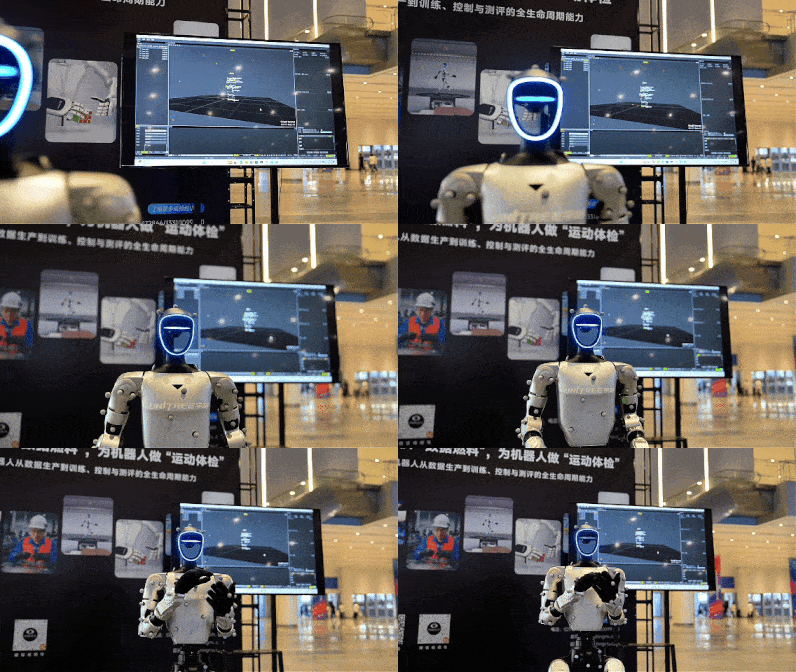
Connecting real-world data on one end, and real robot execution on the other.
From data acquisition and motion learning to robot execution and validation, CHINGMU is continuously advancing its technology and product capabilities for Embodied AI.
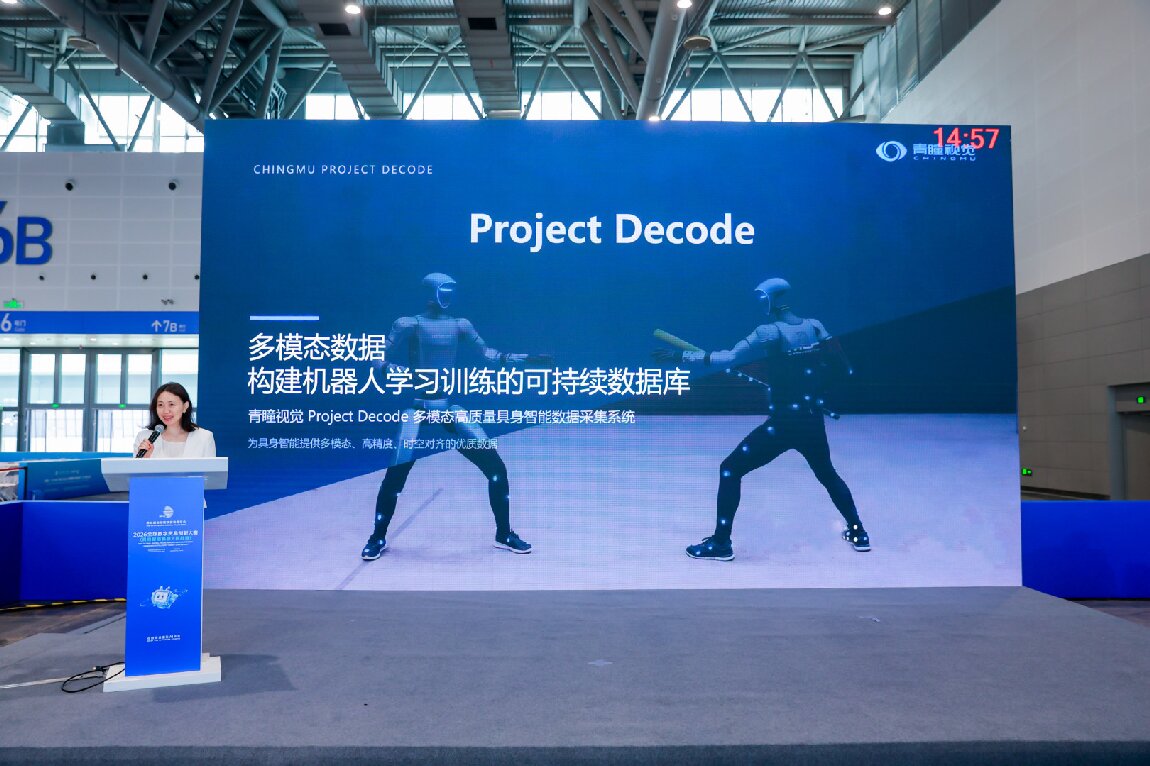
In addition, the Sales Director of Shanghai CHINGMU Vision Technology Co., Ltd. was invited to attend the concurrently held "Embodied AI Innovation Workshop" and delivered a keynote speech titled "Multimodal Data: Building a Sustainable Database for Robot Learning and Training." She shared CHINGMU's practices and insights on real-world data acquisition, robot training support, and motion validation, focusing on how high-quality multimodal data drives robot learning and training.
Part 04
From "Electronic Referee" on the Field to an Objective Ruler for Robot Motion
From the repeated turnarounds of a 6-hour endurance race to the split second a humanoid robot leaps into the air, robot competitions are becoming ever more diverse — and high-precision mocap is making more and more robot motion performance measurable, quantifiable, and verifiable.
As robots truly move from demos into competitive arenas, R&D testing, and real-world applications, an objective "ruler" will only become more important.
Let robot motion be accurately measured. Let every improvement be traceable through data.
This time, CHINGMU brought this "digital ruler" to the robot competition field.
Next time — where will it be?
CHINGMU: The "Electronic Referee" Behind Robot Competitions
On September 23 the 5th Global Digital Trade E...



+86-21-56472866 / 13310099680
1190 Nong METACINE (South Gate), Building 1, CHINGMU, Zhengtai Road,Baoshan District, Shanghai

Hot searches: Motion capture, Optical motion capture, Motion capture system robot, Motion capture, Bionic robot, Motion control, Gait analysis, Rehabilitation training action assessment, Animation production, Virtual idol live streaming, Expression capture, Virtual production, Pre-visualization, Performance capture