
2026/10/21

Recently, leveraging the OpenLET Embodied AI Open-Source Dataset Community, CHINGMU and Leju Robotics have officially released the LET-HumanMotion-Roban2 dataset.
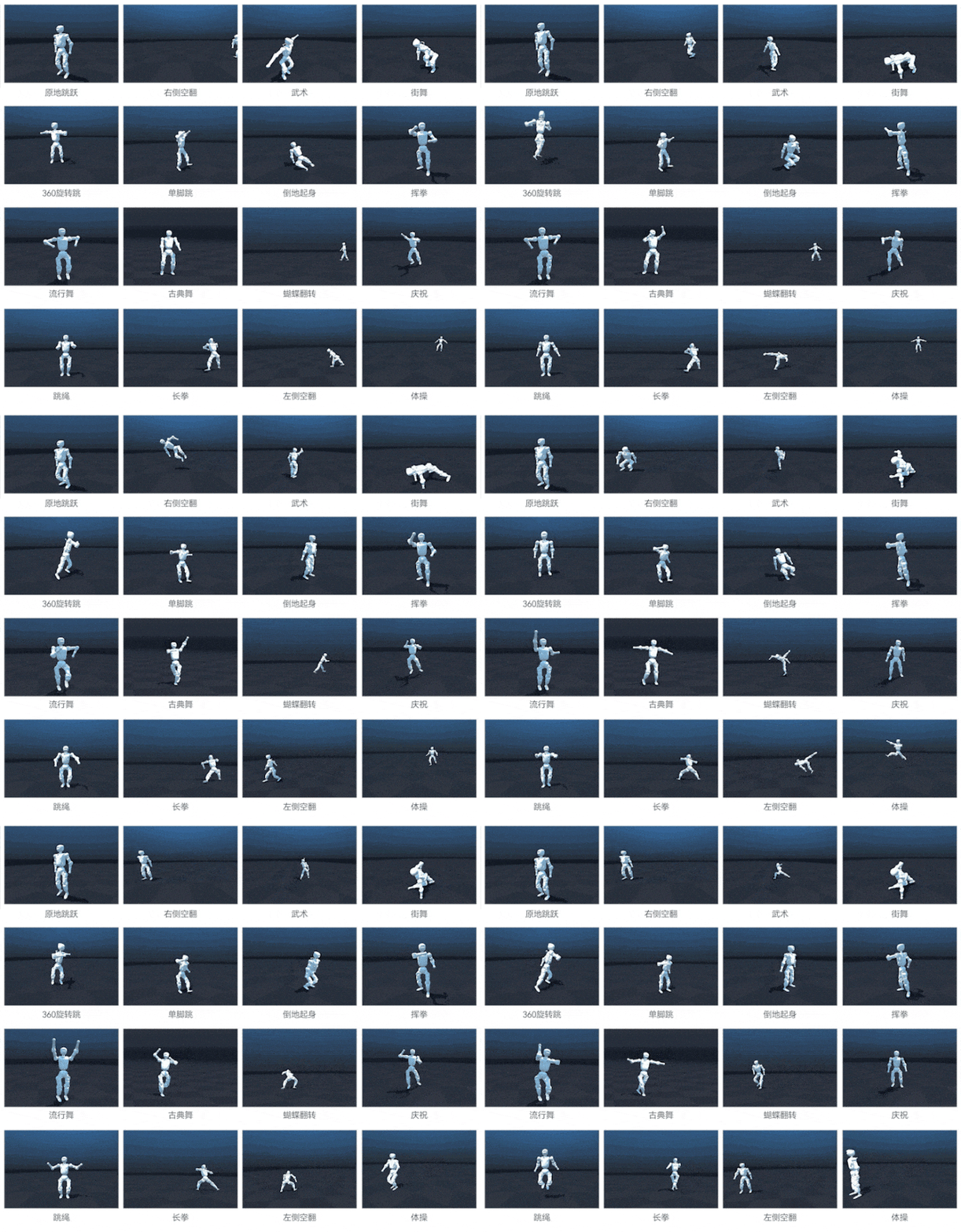
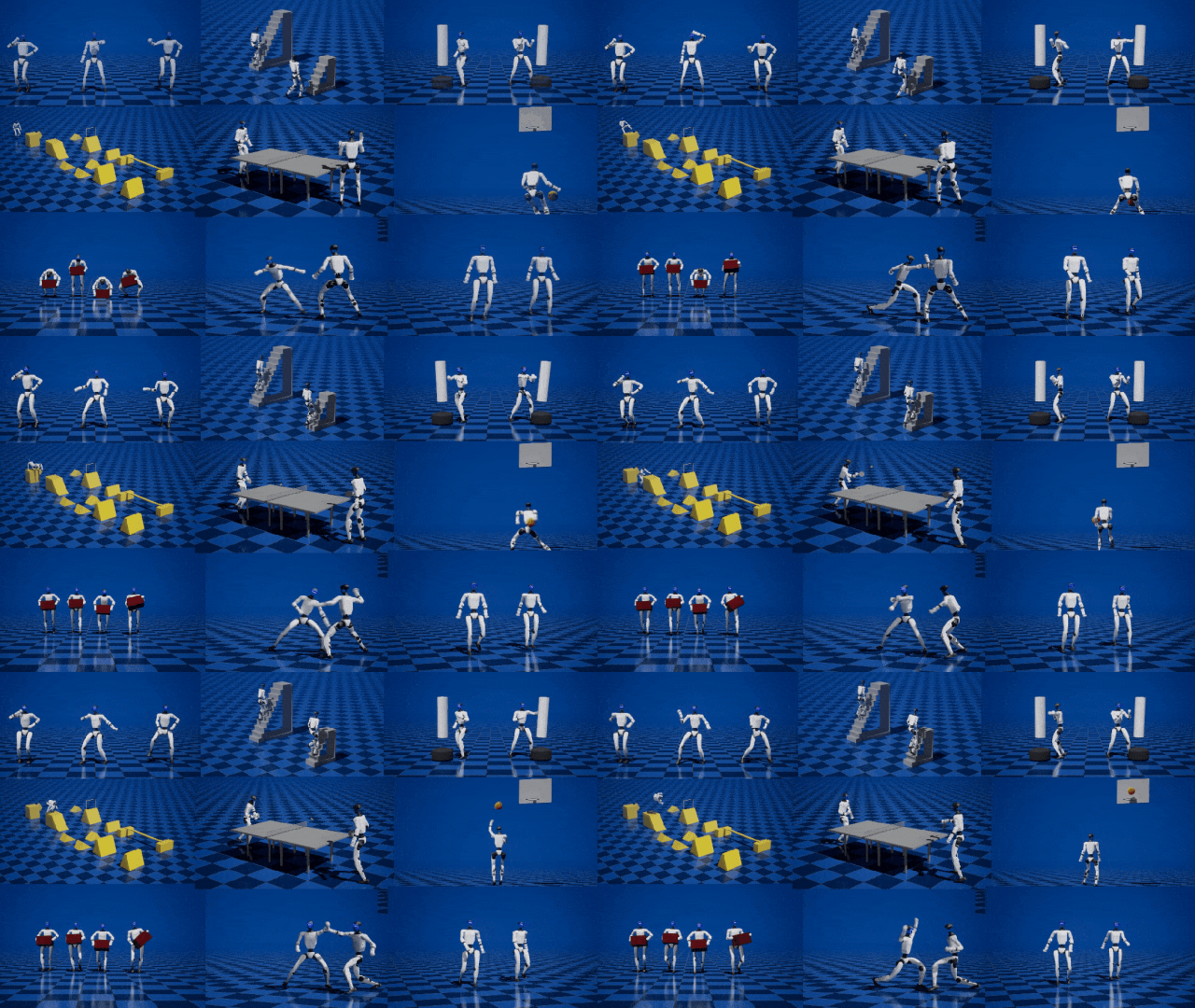
Built on high-precision human motion capture data from CHINGMU's MotionDecode, the dataset comprises 39,692 motion data entries spanning 200+ hours of motion content and covering 800+ motion categories. Through motion retargeting, refinement, and format adaptation, standardized motion trajectories tailored for the Roban 2 robot have been produced, accompanied by a data conversion and training toolchain to support robot motion learning, motion-control training, and development.
From real human motion to motion data adapted for a robot's physical form, this joint release gives the application value of MotionDecode a more concrete manifestation.
01. 800+ Motion Categories: Building a Rich Robot Motion Data Resource
For robots to master more diverse movements, they need not only motion-control algorithms but also rich motion data.
The LET-HumanMotion-Roban2 dataset, jointly released by CHINGMU and Leju Robotics, goes beyond basic actions such as walking, running, jumping, and standing up to include variations like speed transitions, direction changes, loaded walking, and posture-constrained motion — providing rich motion samples for humanoid robot motion learning and motion-control training.
39,692 entries
200+ hours | 800+ categories
Non-interactive motion, environment interaction, object interaction, martial arts, dance...
For humanoid robots, improving motion capabilities depends not only on iterating control algorithms, but also on a large volume of high-quality, diverse motion data. Whether the data accurately records the motion process and whether it can be adapted to a specific robot's physical form both affect how it is used in downstream R&D.
The value of motion data, therefore, is not determined by volume alone, but also by whether its motion information can be effectively recorded, and whether it can be processed and adapted to enter a specific robot's development pipeline.
02.From Human to Robot: How MotionDecode Data Adapts to a Robot's Physical Form
Human motion data cannot be directly equated with motion data usable by robots.
Humans and robots differ in skeletal structure, joint degrees of freedom, and motion constraints. Even if human motion is accurately recorded, it still requires retargeting and body adaptation before it can be transformed into motion trajectories suitable for a specific robot platform.
The LET-HumanMotion-Roban2 dataset released this time is a concrete practice of this process.
Developed from CHINGMU's MotionDecode multimodal training dataset, the dataset transforms high-precision human motion into standardized motion trajectories for the Roban 2 robot through motion retargeting, motion refinement, and format adaptation.
This process preserves the motion reference provided by real human movement while completing adaptation for the robot's structural and kinematic characteristics — enabling the captured human motion to be further applied to robot motion learning and motion-control training.
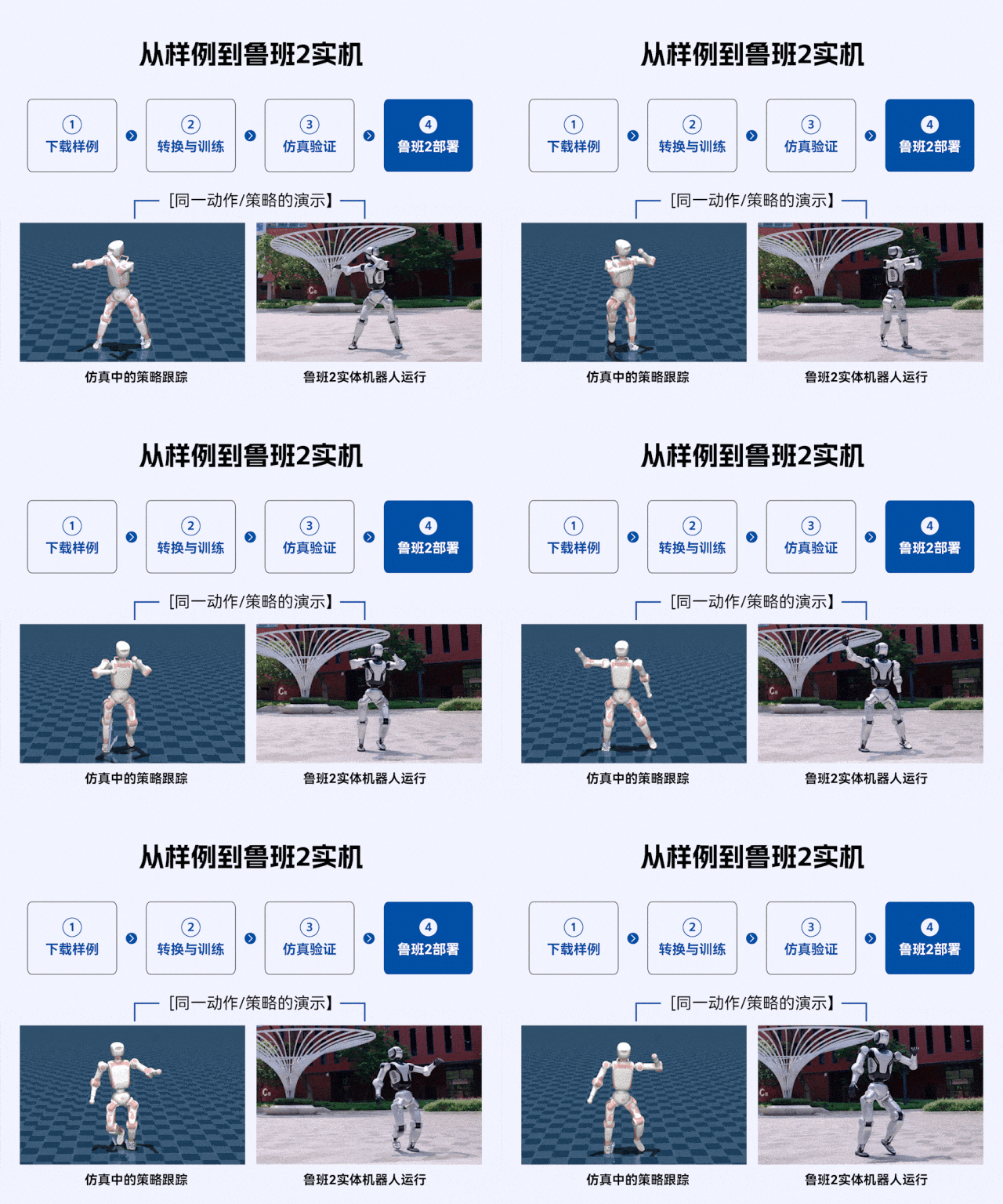
Beyond motion data itself, the accompanying data conversion and training toolchain further connects data processing, model training, simulation validation, and deployment — closing the development loop from "data to training to simulation to deployment." Developers can build on these motion resources to conduct motion-control training, simulation validation, and real-robot development, reducing redundant data preparation and motion adaptation work.
From recording real human motion to forming motion resources for a robot's physical form, the data capabilities of MotionDecode have been concretely applied in the LET-HumanMotion-Roban2 project.
This also shows that the value of high-quality motion data lies not only in the acquisition stage, but also in its ability to be used in specific robot development tasks after processing and adaptation.
03.Open Data Resources: Co-Building a Robot Motion Learning Ecosystem
The LET-HumanMotion-Roban2 dataset is also a key data resource within Leju Robotics' open-source system for its general-purpose cerebellar motion-control foundation model.
According to Leju's release, its general-purpose cerebellar motion-control foundation model is built around four modules — a motion-control foundation model, full-body teleoperation, whole-robot data acquisition and training, and open-source motion datasets — providing models, data, and tooling for research and development in robot motion control.
Among these, the LET-HumanMotion-Roban2 dataset, jointly released by CHINGMU and Leju Robotics, provides motion resources for the Roban 2 robot's motion learning and motion-control training.
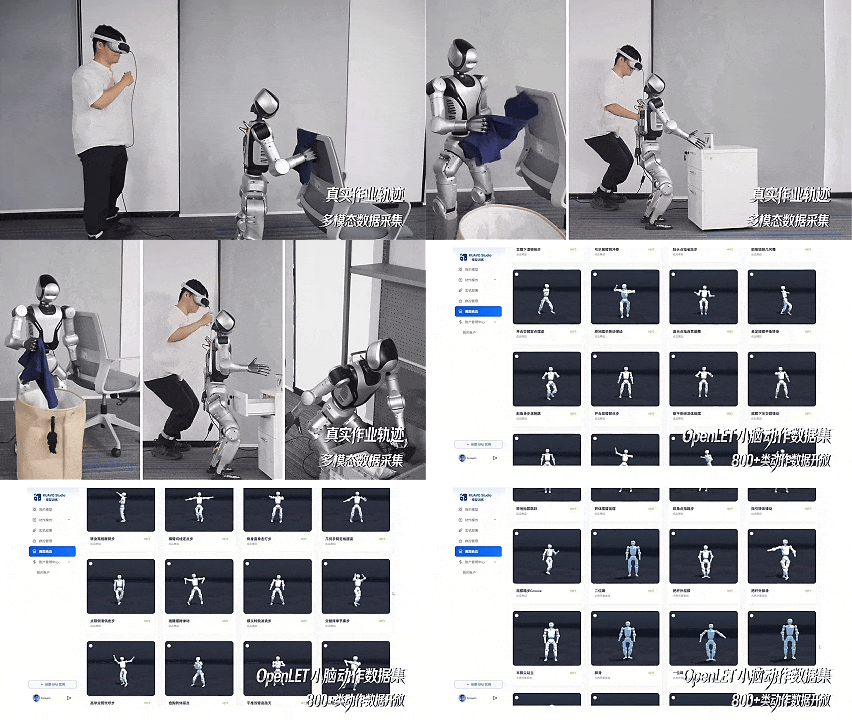
This joint release is one of the practical applications of MotionDecode data on a specific robot's physical form. Beyond this, CHINGMU continues to build a multimodal motion data system for diverse Embodied AI tasks.
Addressing the diverse data needs of Embodied AI, CHINGMU is continuously building a multimodal motion data system covering dimensions such as human motion, hand manipulation, visual perception, and object interaction.
The MotionDecode multimodal training dataset covers multiple dimensions — Body, Hand (including force feedback), Ego (first-person view), Exo (third-person view), Object 6D (six-dimensional object pose), and environmental scenes — and spans typical application scenarios including industrial manufacturing, home services, supermarket retail, medical rehabilitation, logistics and warehousing, ball-game interaction, and digital entertainment. It includes 500+ human-robot tasks and 200+ objects, tools, and props, providing a multi-dimensional motion and interaction data foundation for Embodied AI R&D.
While advancing data applications, CHINGMU also continues to promote the open sharing of high-quality motion data.
To date, CHINGMU has partnered with EnDecodeX to launch the MotionDecode Data Open Program, opening a free application channel for the first 1,000 hours of high-quality human motion data to the global community, while continuing to update and share data resources.

From real human motion data to motion resources tailored for a specific robot's physical form — the joint release of the LET-HumanMotion-Roban2 dataset offers a concrete practical case for applying high-quality motion data in robot R&D.
The development of Embodied AI requires not only continued breakthroughs in models and algorithms, but also effective linkage across data acquisition, processing, adaptation, and training.
Looking ahead, CHINGMU will continue to deepen collaboration with Leju Robotics, the OpenLET community, and industry partners — promoting the open sharing and application exploration of high-quality motion data, and providing richer data support for robot learning and motion intelligence.
From real human motion to motion data usable by robots.
Letting high-quality motion data better serve robot learning.
From Table Tennis to Tennis: CHINGMU Joins Forces with Unitree and Galbot on Three Major International Stages
A ping-pong ball and a tennis ball made Chines...CHINGMU × Leju Robotics: OpenLET Robot Motion Dataset Goes Open-Source with 800+ Motion Categories
Recently leveraging the OpenLET Embodied AI Op...




+86-21-56472866 / 13310099680
1190 Nong METACINE (South Gate), Building 1, CHINGMU, Zhengtai Road,Baoshan District, Shanghai

Hot searches: Motion capture, Optical motion capture, Motion capture system robot, Motion capture, Bionic robot, Motion control, Gait analysis, Rehabilitation training action assessment, Animation production, Virtual idol live streaming, Expression capture, Virtual production, Pre-visualization, Performance capture