
2026/10/21

From “How Much Was Collected” to “How Much Was Used” – and Ultimately “How Much Was Learned”
1,000 hours, 5,000 hours, 10,000 hours…
The data race in Embodied AI is entering a phase of scale.
One increasingly obvious shift: robot training data is no longer just “small-scale collection” in laboratories, but is entering a real stage of data production. The industry has recently seen scaled practices such as robot training facilities covering thousands of square meters, with dozens of robots and hundreds of data acquisition devices deployed at once.
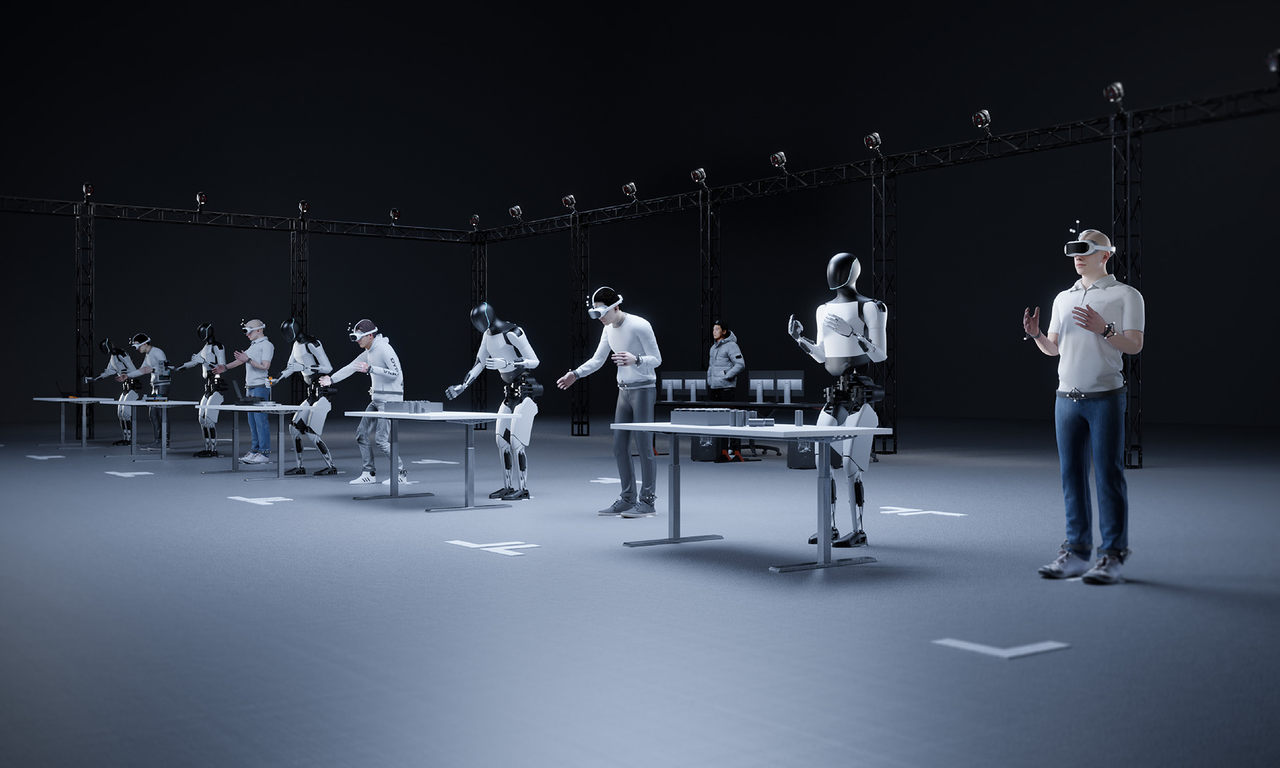
As data production moves toward “factory-style” operations, “hours” naturally become the most intuitive metric.
And there is nothing wrong with that.
For Embodied AI, a sufficiently large data scale still matters. Without scale, it is difficult to cover a rich enough range of tasks, motions, objects, and environments — nor to support continuous generalization of robot capabilities.
But once scale is achieved, a new question emerges:
Can data generated by different devices, different acquisition methods, and different tasks still be measured by the same “hours” alone?
1,000 hours of high-precision motion data. 1,000 hours of first-person video. 1,000 hours of teleoperation data…
All are 1,000 hours — yet the information they contain, the tasks they suit, and the training stages they can enter are not entirely the same.
So, as robot training data grows from hundreds of hours to thousands, tens of thousands, or even larger scales, beyond asking:
“How much is there?”
perhaps we should also keep asking four more questions:
Is it real? Is it accurate? Is it usable? Is it effective?
01 | Is It Real?
What Robots Ultimately Face Is the Real World
Today, robots have more and more ways to acquire data.
Human demonstration, robot teleoperation, portable data acquisition, simulation generation… different technical routes are together driving rapid growth in data scale.
They solve different problems, and each has its own value.
So the discussion around robot data should not simply become:
“Which acquisition method is best?”
The real question should be:
For different tasks, what kind of data do robots actually need?
But no matter how technical routes change, one thing has never changed:
Robots will ultimately have to enter the real physical world.
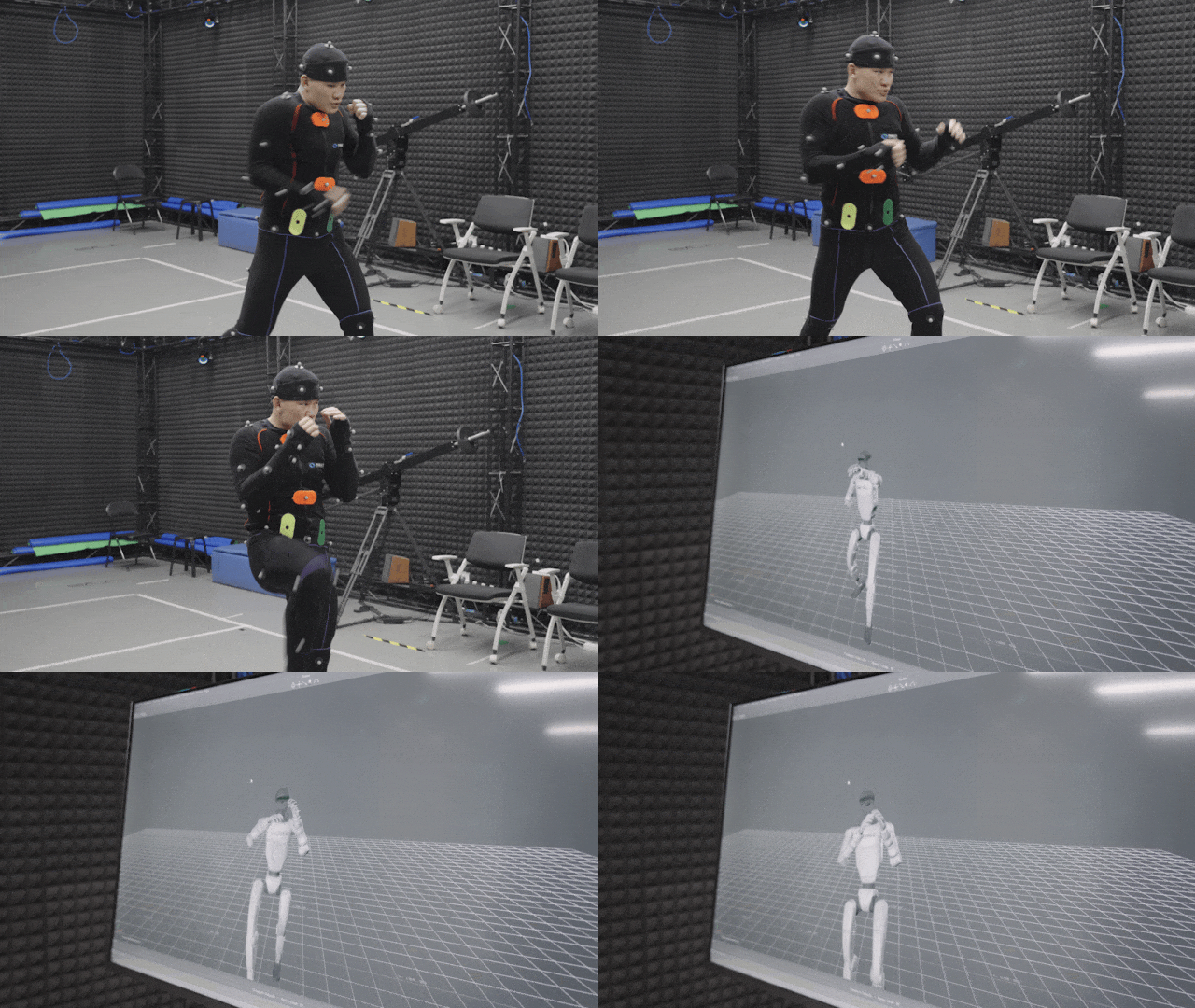
And the real world is, by nature, non-standardized.
For the same grasping task, different people adopt different motions. When an object's position, size, weight, or material changes, the way it is manipulated changes accordingly.
The real world also contains a large number of factors that are difficult to predefine:
real people, real motions, real objects, real contact, real environments, and real failures and disturbances as they occur.
These complexities are the problems robots must ultimately confront.
So, even as simulation and generative data routes continue to advance, real-world data still serves as an important reality anchor.
Robots need to know not only:
“How a task should be completed.”
But also understand:
“How a task actually unfolds in the real world.”
02 | Is It Accurate?
The Same One Hour Can Record Completely Different Information
“It really happened” does not mean “it was accurately recorded.”
A person really completed a grasp.
The motion itself is certainly real.
But if we go further and ask:
Was the human posture recorded accurately?
Was the finger motion fully captured?
What was the object’s true position and posture?
When exactly did the hand make contact with the object?
Can the video, body, hand, and object data be accurately aligned in time?
Then the problem starts to become complex.
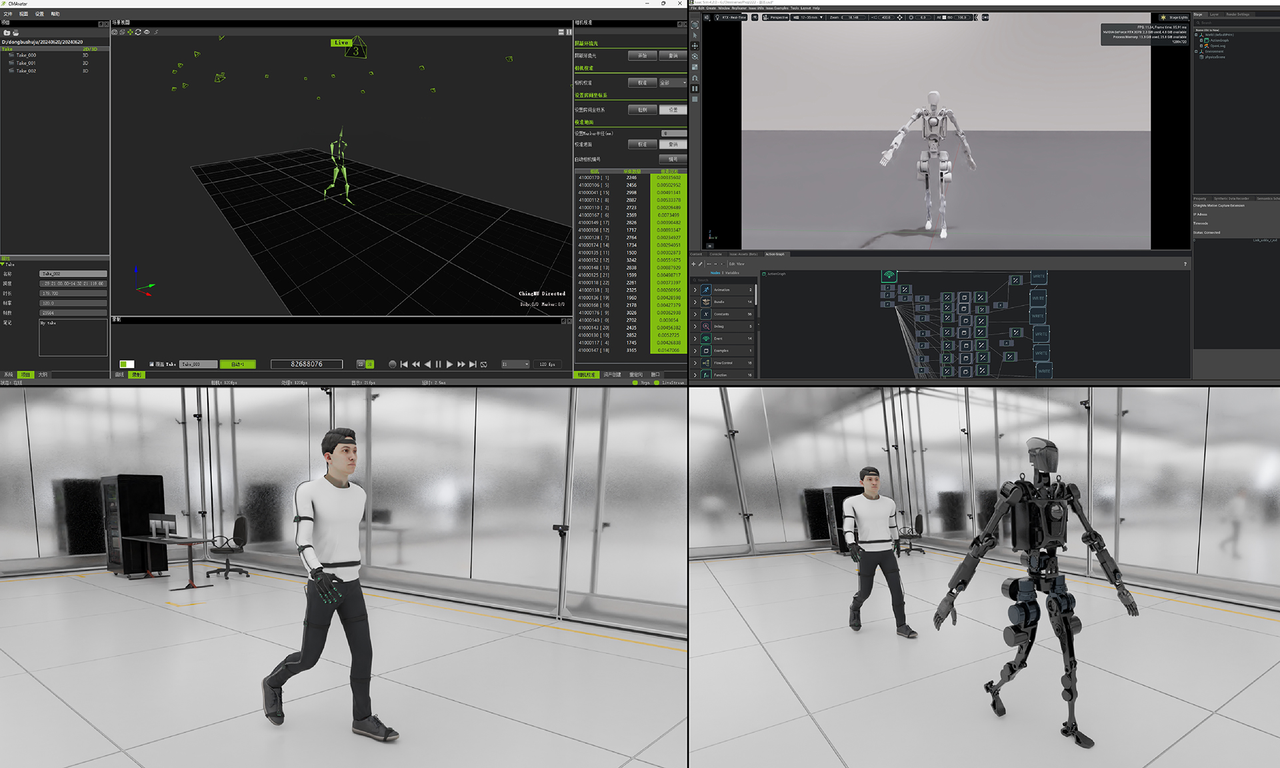
This is also why, as the scale of robot data production expands, an increasing variety of data acquisition devices and technical routes are emerging across the industry.
First-person cameras, portable capture devices, optical motion capture, hand data, Object 6D, force data, robot logs…
They are not simple substitutes for one another.
Different tasks require different data; different data impose different requirements on precision, modality, and synchronization.
For example, some tasks first require rapidly obtaining large volumes of visual and manipulation demonstrations;
others require accurately knowing how a human body, robot, or object actually moves in 3D space;
and some complex operations require simultaneously understanding the body, hand, object, vision, and contact relationships.
So, once data production reaches scale, what we need to focus on is not only:
“How efficient is acquisition?”
We should also further answer:
“For this task, what needs to be captured — and how accurately?”
This may be closer to the real problem of scaled robot data production than simply comparing whether one device is “good” or not.
03 | Is It Usable?
Real Data Scale Is Not Just “How Much Was Collected”
Suppose a training facility produces hundreds of hours of raw data in a single day.
Does that mean:
the robot now has hundreds of additional hours of data that can be directly used for training?
Not necessarily.
From “acquisition completed” to “entering training,” there is a long pipeline in between.
How are tasks organized?
How is data from different devices synchronized?
How is data cleaned, labeled, and structured?
Can the format be directly used by training frameworks?
How is human motion adapted to different robots?
Can the data enter simulation environments?
Are the training interfaces compatible?
For human demonstration data in particular, there is an inherent problem:
humans and robots do not share the same body.
Humans and different robots differ in skeletal structure, joint degrees of freedom, range of motion, and more.
What a human can naturally perform cannot simply be copied to a robot.
So for a segment of human demonstration data to truly enter robot training, it often has to go through:
Real-world task acquisition
↓
Multimodal data synchronization
↓
Data processing and task-oriented organization
↓
Motion retargeting
↓
Robot body adaptation
↓
Entering the training pipeline
This is also a problem that is easily masked by “hours” in scaled data production:
how much was captured does not necessarily equal how much can actually be used.
So in the future, measuring robot data production capacity may not be reducible to a single “acquisition hours” figure.
We should also keep focusing on: how much of it can truly enter the training pipeline.
This is the key step for data to move from “scale” to “asset.”
04 | Is It Effective?
Ultimately, It Comes Back to: Has the Robot Learned?
If a batch of data comes from the real world, is accurately recorded, and after processing successfully enters the training pipeline — does that prove it is “high-quality data”?
Not necessarily. We still cannot jump to that conclusion so easily.
Because the ultimate value of training data should not be defined solely by the data producer.
It must also be tested against the robot’s actual learning outcomes.
After adding a certain type of data, has task success rate changed?
Facing new objects and environments, has generalization improved?
After deployment to the real robot, is execution more stable?
What impact do data from different acquisition methods and different quality levels actually have on model training performance?
These questions ultimately need to be answered by training and benchmarks.
Today, the entire industry is still exploring more systematic ways to evaluate data.
So at this stage, rather than rushing to give “high-quality data” a unified definition, we would rather pose a question first:
In the future, evaluating robot training data may require asking not only “how much was collected,” but also “how much was used” — and ultimately “how much was learned.”
Whether data ultimately has value still comes back to robot capability itself.
Once Data Reaches Scale, We Need Multi-Dimensional Value Judgments
So, saying “robot training data cannot be judged by hours alone” is by no means saying scale doesn’t matter.
Quite the opposite.
Scale remains a foundational capability for the development of Embodied AI.
It’s just that now — as robot training facilities begin to be built at scale, as dozens of robots and hundreds of data acquisition devices are put into production simultaneously, and as different technical routes jointly participate in data production — “hours” can hardly describe the full value of a batch of data on their own.
We may need to establish more multi-dimensional judgments:
Scale | How much is there?
↓
Quality | Is it real, accurate, and complete?
↓
Usability | How much of it can truly enter training?
↓
Effectiveness | Has the robot ultimately learned?
This is not a finished industry standard.
Rather, it reflects CHINGMU’s thinking on the value of robot training data, accumulated over long-term involvement in data acquisition, processing, and application.
Nor does future data production necessarily require all data to pursue the same precision, the same modalities, and the same production costs.
A more reasonable direction may be:
Select data acquisition methods and quality levels that match different tasks and training stages.
Where scale is needed, solve for scale.
Where precision is needed, guarantee precision.
For tasks that require multimodality, establish complete data relationships.
And ultimately, ensure that more data truly enters training.
This may be the real problem that scaled data production needs to solve.
CHINGMU Is Answering the Same Question
Based on this thinking, CHINGMU continues to explore: how should the data that robot training truly needs be produced?
Centered on real-world human demonstrations and robot training requirements, CHINGMU has built MotionDecode — a high-quality multimodal motion data system for Embodied AI training.
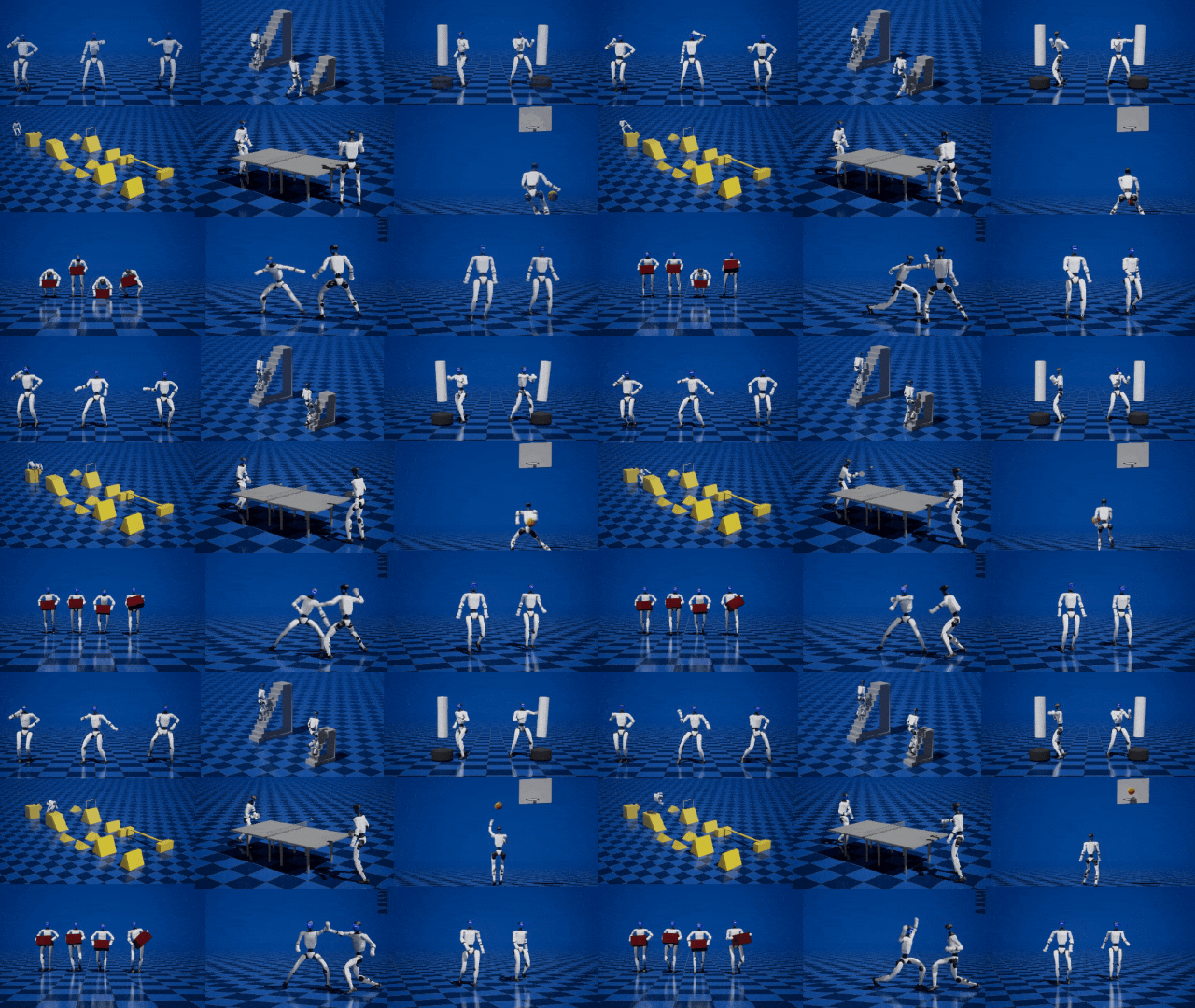
Starting from real human motion, MotionDecode captures motion and interaction information across the body, hands, and objects. Through multimodal synchronization, task-oriented organization, and robot motion retargeting and adaptation, it brings real-world human motion further into the robot training pipeline.
The first batch of 1,000 hours of high-quality human motion data from MotionDecode is now open for application.

Meanwhile, CHINGMU continues to expand its scaled data production capabilities and, through different acquisition methods and multimodal data capabilities, builds data production systems tailored to different robot tasks.
To date, CHINGMU has established data partnerships with Embodied AI companies including Unitree, AgiBot, and Lingbo Technology, providing data support for robot model training.
These real-world practices have made one thing even clearer: “1,000 hours” is worth paying attention to.
But what matters more than the 1,000 hours themselves is: why this data was collected, what was captured, how much of it can truly enter training, and what the robot ultimately learned from it.
The Next Competition Is Not Just About “Collecting More”
Robot training data will continue to grow.
1,000 hours will not be the endpoint.
Neither will 10,000 hours.
Lower costs, higher efficiency, and larger-scale data production remain important problems the entire industry must solve.
But as data supply capacity rises rapidly, competition in robot data will enter its next phase:
From who can collect more
toward who understands what data a given task requires — and can make that data truly produce training value?
So the next time we see a larger robot training dataset, beyond asking:
“How many hours?”
perhaps we should also keep asking:
Is it real?
Is it accurate?
Is it usable?
Is it effective?
Because the next competition in robot training data
is not just about “collecting more” — but about “how much can truly be learned by the robot.”
MotionDecode
High-Quality Multimodal Motion Data System for Embodied AI Training
Real Human Motion Capture · Multimodal Synchronization · Robot Retargeting · Custom Data Production
First batch of 1,000 hours of high-quality human motion data now open for application
As Open-Source Datasets Explode, Why Do Robots Still Need "Ground Truth"?
As data grows ever more abundant perhaps we sh...




+86-21-56472866 / 13310099680
1190 Nong METACINE (South Gate), Building 1, CHINGMU, Zhengtai Road,Baoshan District, Shanghai

Hot searches: Motion capture, Optical motion capture, Motion capture system robot, Motion capture, Bionic robot, Motion control, Gait analysis, Rehabilitation training action assessment, Animation production, Virtual idol live streaming, Expression capture, Virtual production, Pre-visualization, Performance capture