
2026/09/04
On August 26, the 2nd World Humanoid Robot Games concluded at the National Speed Skating Oval (Ice Ribbon) in Beijing. A total of 666 teams from 16 countries, with 2056 robots, competed on the same stage.
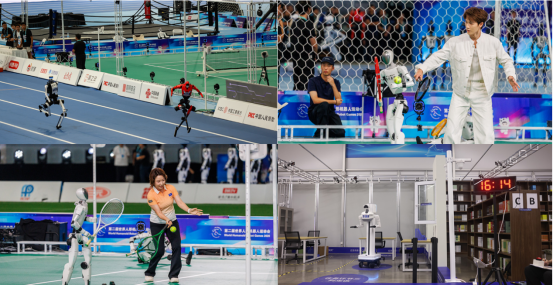
On the opening night of August 22, the Galbot humanoid robot from Galaxy Universal Robotics stepped onto the tennis court and completed the world’s first large‑scale‑live‑broadcast fully‑autonomous human‑robot tennis rally with tennis star Zheng Jie and guest experience officer Li Yunrui. During singles and doubles matches, the robot independently judged the landing point of incoming balls, moved into position, adjusted its posture and executed forehand strokes, backhand strokes, serves, returns, baseline rallies and net volleys. It even got back on its feet and resumed play after falling during high‑speed offense‑defense exchanges.
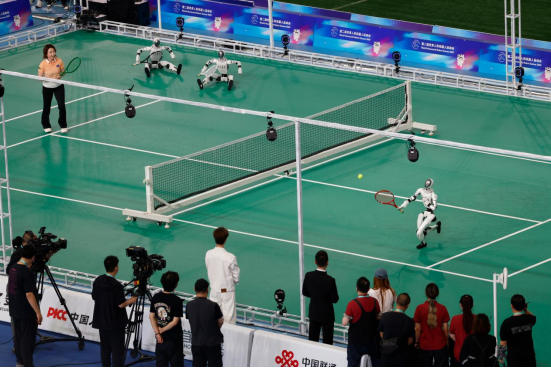
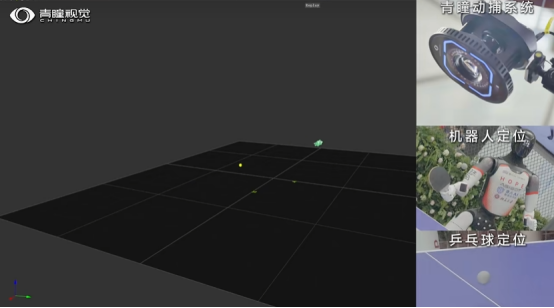
This had previously been verified during the AGIBOT HOPE AI table‑tennis exhibition match. CHINGMU’s Kunpeng (K)‑series optical motion‑capture system tracked high‑speed balls and robots at 300 FPS with ±0.02 mm accuracy.
The scenario‑based competition events were expanded from 6 in the first edition to 21, covering 9 real‑world sectors including households, hotels, industry, emergency rescue, hospitals and supermarkets. Six competitions were designed around professional job roles, with 1:1 reproduced real‑world work environments built inside the venue:
Scenario‑based competitions are characterized by “full autonomy, long‑duration workflows and authentic environments”. Robots independently complete perception, decision‑making and manipulation. CHINGMU’s motion‑capture system does not participate in robot control or decision‑making, but functions as an independent external measurement tool. It adopts a combined marker‑based and marker‑free technical solution, deploying K‑series, MC‑series, R3 and other motion‑capture devices together with CMAvatar software to perform panoramic positioning and tracking of robots across the competition venue, continuously recording their position, posture, trajectory, velocity and stability.

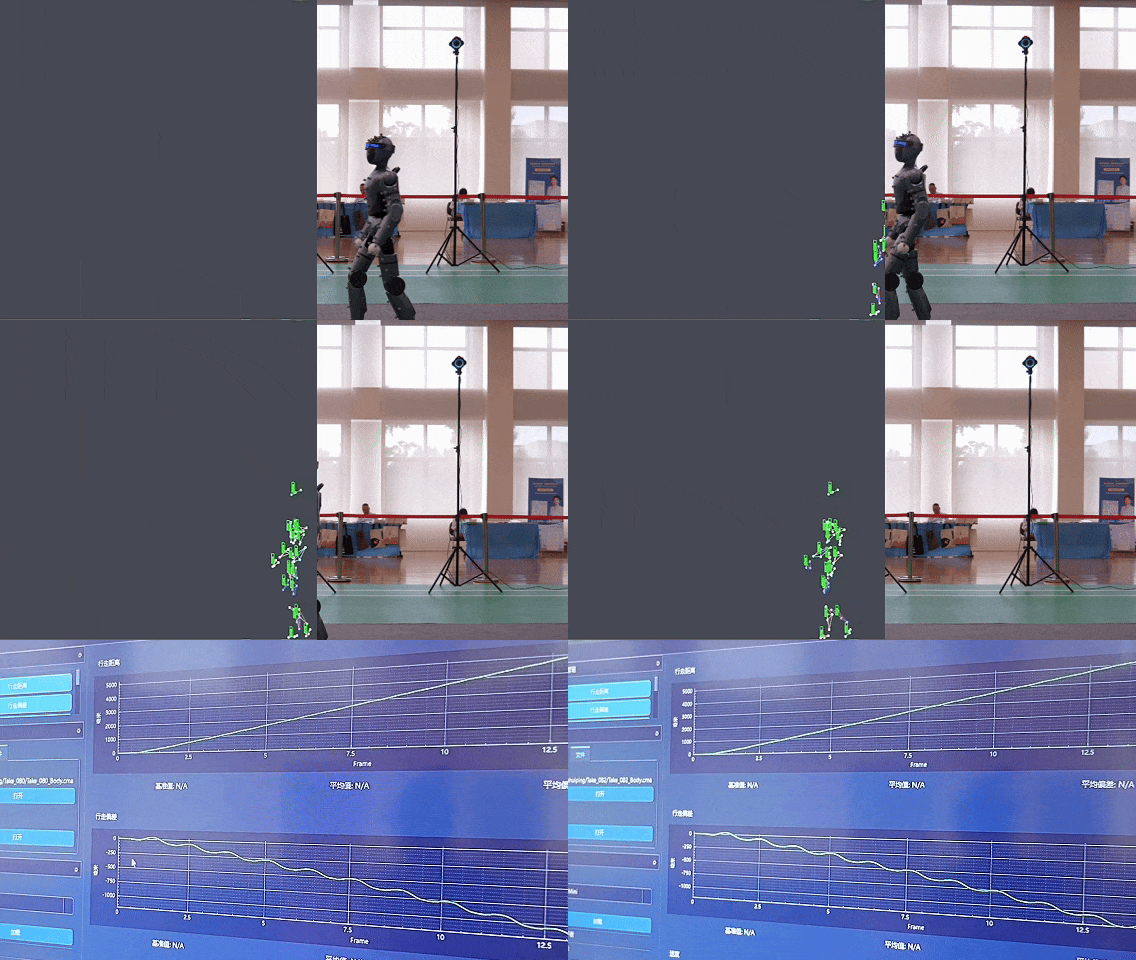
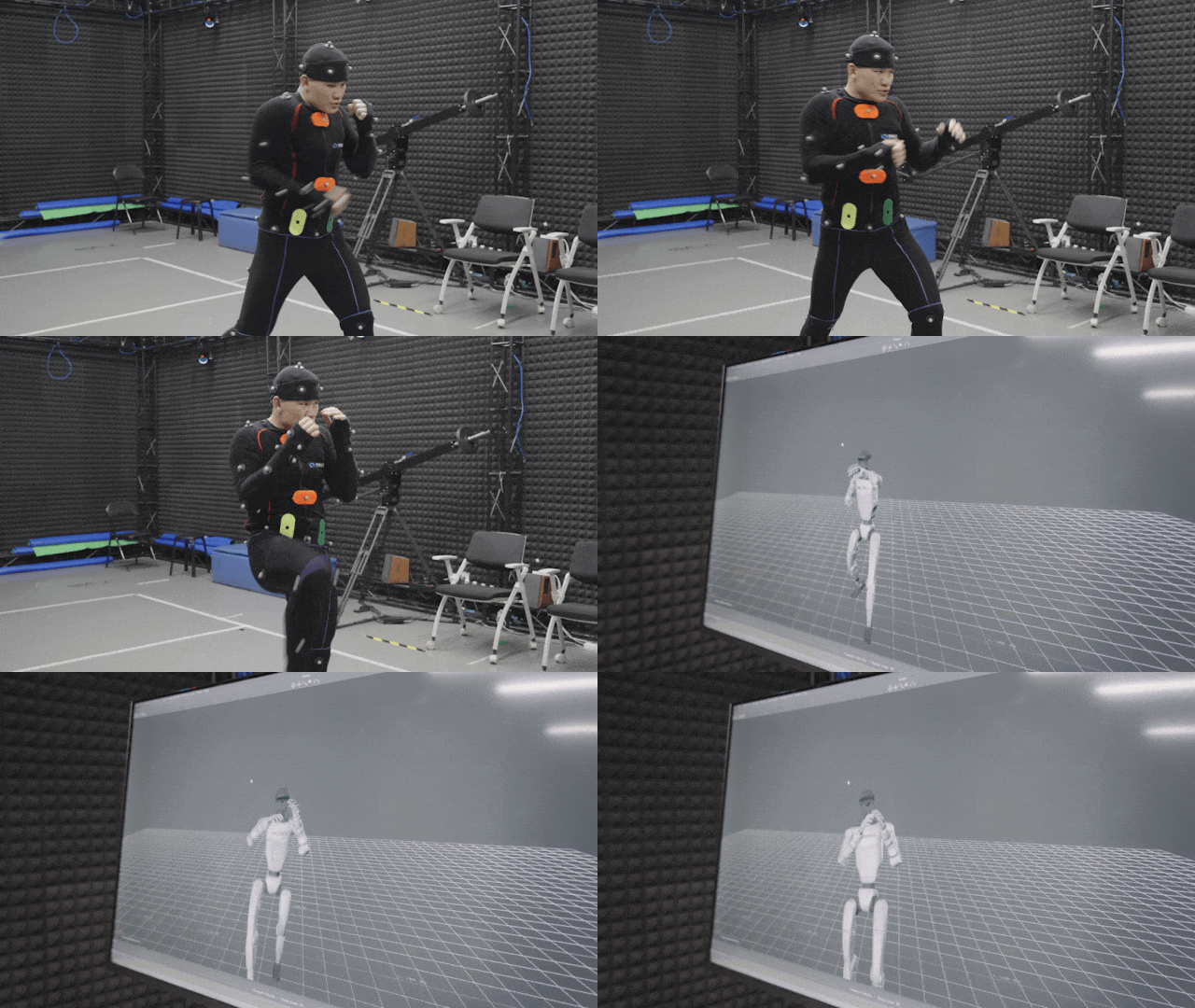
Second, training. CHINGMU provides end‑to‑end services covering motion‑data acquisition and dataset construction, robot training, control‑algorithm validation, real‑time teleoperation and full‑scene performance evaluation — the whole R&D lifecycle for humanoid robots. By deploying high‑performance motion‑capture camera arrays, the system can simultaneously achieve six‑degree‑of‑freedom spatial positioning and pose tracking for high‑speed moving objects and robot bodies. With sub‑millimeter accuracy and low‑latency data acquisition, it fully captures motion trajectories and real‑time joint data of robots. As ground‑truth data, these measurements deliver critical training labels and validation benchmarks for robot kinematic modeling and controller optimization.
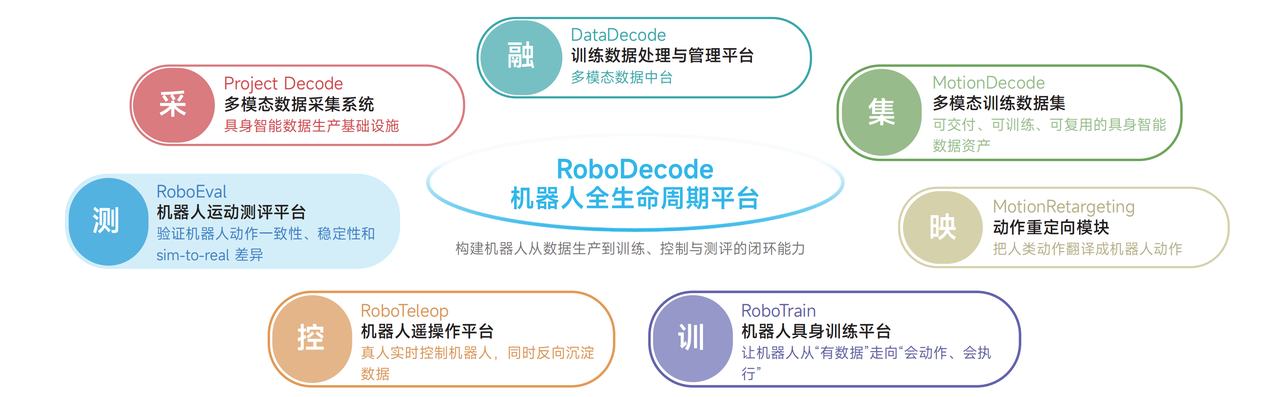
Underpinning these capabilities is CHINGMU’s RoboDecode full‑lifecycle robot platform. Built upon optical motion capture and multi‑modal perception, it consists of seven modules: Acquisition, Fusion, Aggregation, Mapping, Training, Control and Evaluation. Data collected from the physical world is fused and annotated to build datasets. Motion mapping adapts data to different robot bodies, training and control modules generate execution policies, and final validation is carried out in real‑world environments. Evaluation results feed back into subsequent data‑acquisition and optimization cycles.
As Open-Source Datasets Explode, Why Do Robots Still Need "Ground Truth"?
As data grows ever more abundant perhaps we sh...




+86-21-56472866 / 13310099680
1190 Nong METACINE (South Gate), Building 1, CHINGMU, Zhengtai Road,Baoshan District, Shanghai

Hot searches: Motion capture, Optical motion capture, Motion capture system robot, Motion capture, Bionic robot, Motion control, Gait analysis, Rehabilitation training action assessment, Animation production, Virtual idol live streaming, Expression capture, Virtual production, Pre-visualization, Performance capture