
2026/11/24

Bioinspired Adaptive Leg-Claw Mechanism
Traditional UAVs typically rely on continuous rotor output to maintain flight. When performing long-duration observation, environmental interaction, and aerial manipulation tasks, they face limitations such as restricted endurance, insufficient environmental attachment capabilities, and weak adaptability in object grasping. Particularly when operating near branches, poles, and other unstructured surfaces, UAVs often struggle to actively perch like birds, limiting their sustained operational capabilities in complex environments.
Raptors in nature possess highly specialized hindlimb structures that coordinate the motion of the leg, foot, and toes to form stable attachments on branches of varying sizes and shapes; bats, on the other hand, can fully utilize environmental structures through hanging perching. How to draw inspiration from the structural and kinematic mechanisms of biological limbs to endow UAVs with simultaneous capabilities of stable perching, environmental adaptation, and active grasping is a critical direction for enhancing the environmental interaction capabilities of aerial robots.
To address these issues, the research team led by Associate Researcher Zhu Guoniu and Professor Gan Zhongxue from Fudan University, drawing inspiration from the limb structure of owls and the perching habits of bats, proposed a Bioinspired Adaptive Leg-Claw Mechanism (BLCM) for UAVs. This mechanism integrates a four-bar linkage tibia, tension-driven deformable feet, and a symmetric toe structure, accompanied by an active grasping strategy and control framework. It enables the UAV to achieve robust perching on surfaces of varying shapes while possessing the ability to grasp multiple types of objects. The mechanism presented in the paper can achieve both standing and hanging perching modes and stably adapt to targets of different sizes and geometric shapes.
The research findings, titled "Bioinspired Adaptive Leg-Claw Enables Robust Perching and Grasping for UAVs," were published in the internationally renowned journal Advanced Science (IF=14.1) and selected as the cover article. Associate Researcher Zhu Guoniu and Professor Gan Zhongxue from Fudan University are co-corresponding authors, and Ph.D. student Cheng Tianyu is the first author.
I. Research Protocol
This study focuses on the question of "how UAVs can stop stably and further engage in physical interaction with the environment," designing a bioinspired leg-claw system that integrates leg motion, flexible adaptation, and toe grasping.
The mechanism primarily consists of three parts: tension-driven deformable feet, a compressible leg based on a four-bar linkage, and symmetrically arranged underactuated toes. All three parts utilize an underactuated design, reducing the degrees of freedom for actuation while achieving adaptability to different target geometric shapes.
Among them, the four-bar linkage leg can utilize the UAV's own weight to generate compressive motion and further convert it into toe grasping force; the tension-driven deformable feet can passively deform in response to cylindrical surfaces, flat surfaces, and local concave-convex surfaces; and the toe angles can be actively adjusted or passively adapt to the target shape, with high-friction materials enhancing contact stability.
For different environmental structures, the BLCM can autonomously switch between standing perching and hanging perching. Unlike traditional hanging perching solutions that require the entire UAV to flip over, this mechanism can adjust its perching posture through leg rotation, allowing the UAV to transition between different perching modes while maintaining its body attitude.
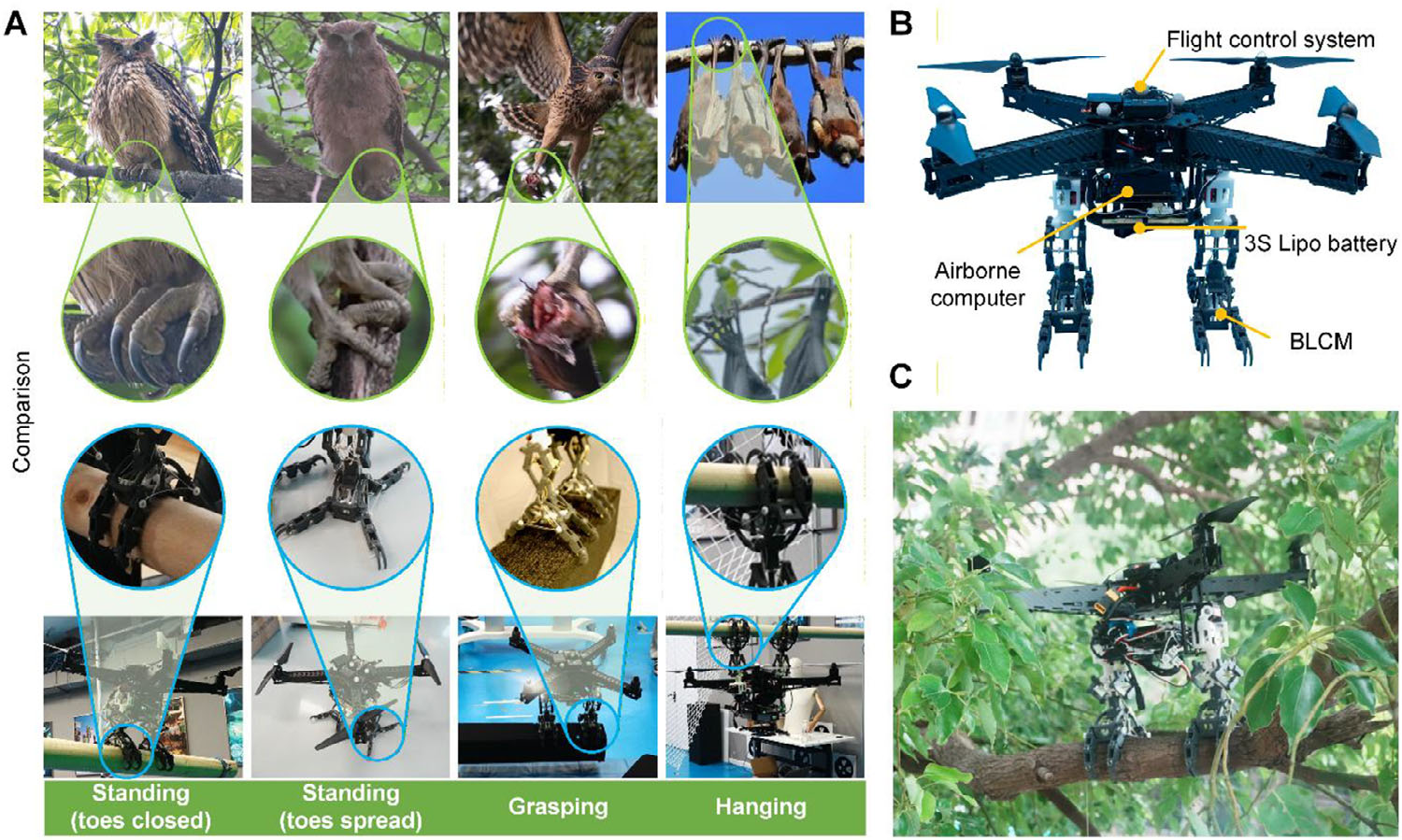
Figure 1: Overall design of the bioinspired adaptive leg-claw mechanism
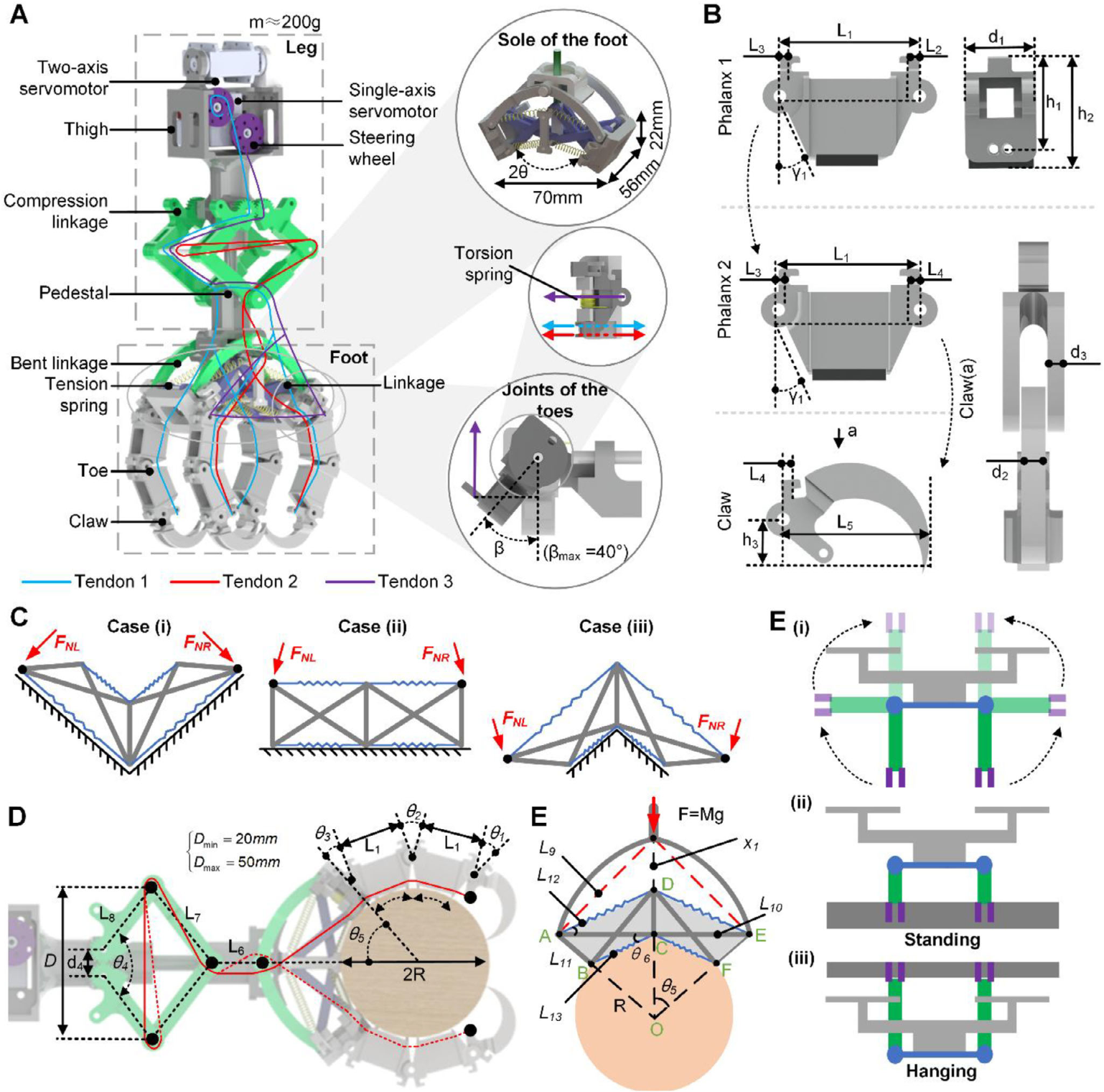
Figure 2: Bioinspired leg-claw structure and working principles of standing and hanging perching
Key Innovations and Advantages
1. Integrated bioinspired leg-foot-toe design. The four-bar linkage leg, deformable feet, and symmetric toe structure are integrated into a unified mechanism, achieving coordinated motion throughout the approach, enveloping, attachment, and grasping processes.
2. Combining active control and passive adaptability. By actively adjusting the leg-claw posture to switch between different task modes, while utilizing the passive deformation of the flexible structure during contact to improve adaptability to unknown surfaces and irregular targets.
3. Integrating both perching and grasping functions. The same mechanism can both support stable perching on environmental structures and actively grasp objects of different shapes.
4. Supporting dual-mode perching: standing and hanging. Mode switching can be completed through leg rotation without the need for the entire UAV to flip, enhancing perching flexibility in complex environments.
II. Experimental Validation
To validate the perching and grasping capabilities of the BLCM on a real UAV platform, the research team further built a complete indoor flight experimental system.
The experiment used the CHINGMU MC4000 optical motion capture system as the core positioning reference equipment for indoor UAV flight. By placing fixed markers on the UAV body, the motion capture cameras acquired the UAV's spatial motion state in real-time, outputting 3D coordinates, Euler angles, and instantaneous velocity at 120 Hz, and transmitting the positioning data to the onboard computer via Ethernet. The original paper explicitly identifies the CHINGMU motion capture system as the "core positioning reference module" in the experiment.
To further improve positioning stability during dynamic flight, the system first used a Kalman filter to denoise the motion capture data and completed the transformation between the world coordinate system and the UAV body coordinate system, achieving time synchronization and data format processing through ROS nodes. On this basis, the high-precision spatial positioning information provided by the CHINGMU MC4000 and the onboard IMU data were fused via an Extended Kalman Filter (EKF) to compensate for communication delays and IMU drift. Finally, the fused state information was input into the flight control PID controller to achieve trajectory tracking and real-time correction of flight deviations. The system can achieve stable hovering in a GPS-denied indoor environment, with the paper reporting a positioning error of no more than 1 cm.
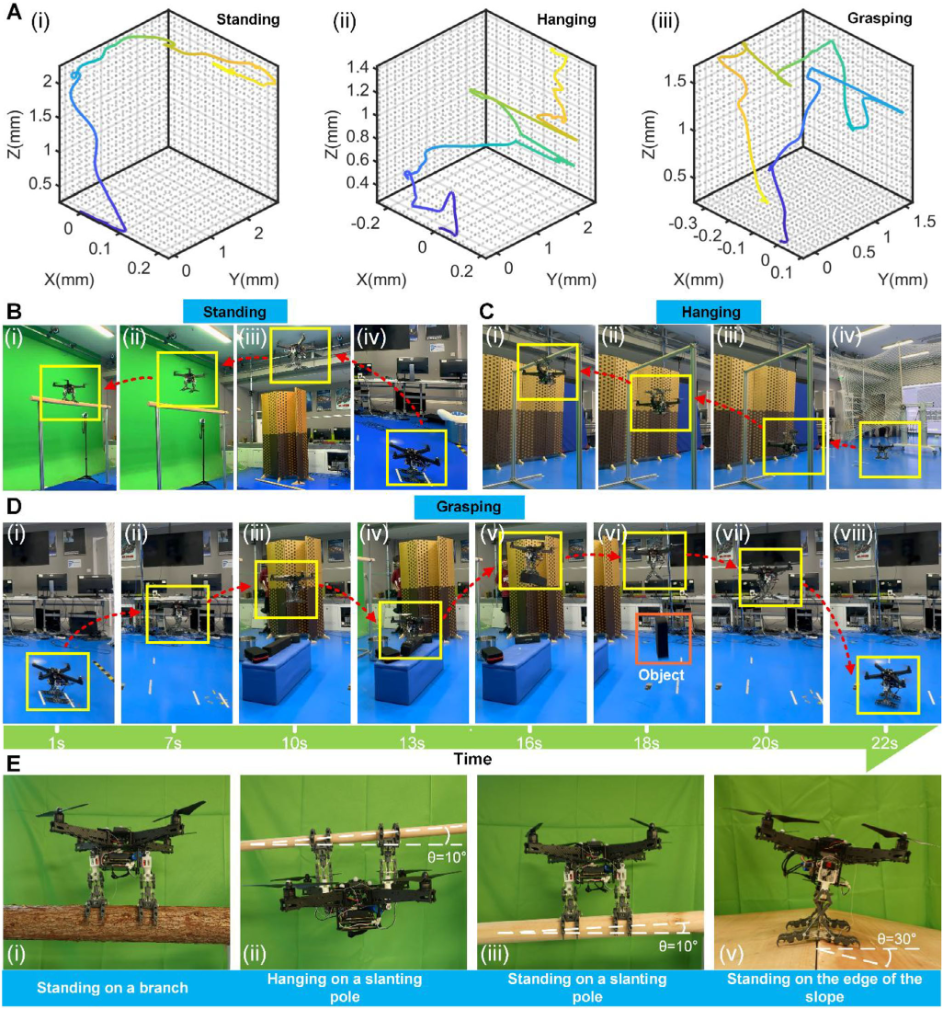
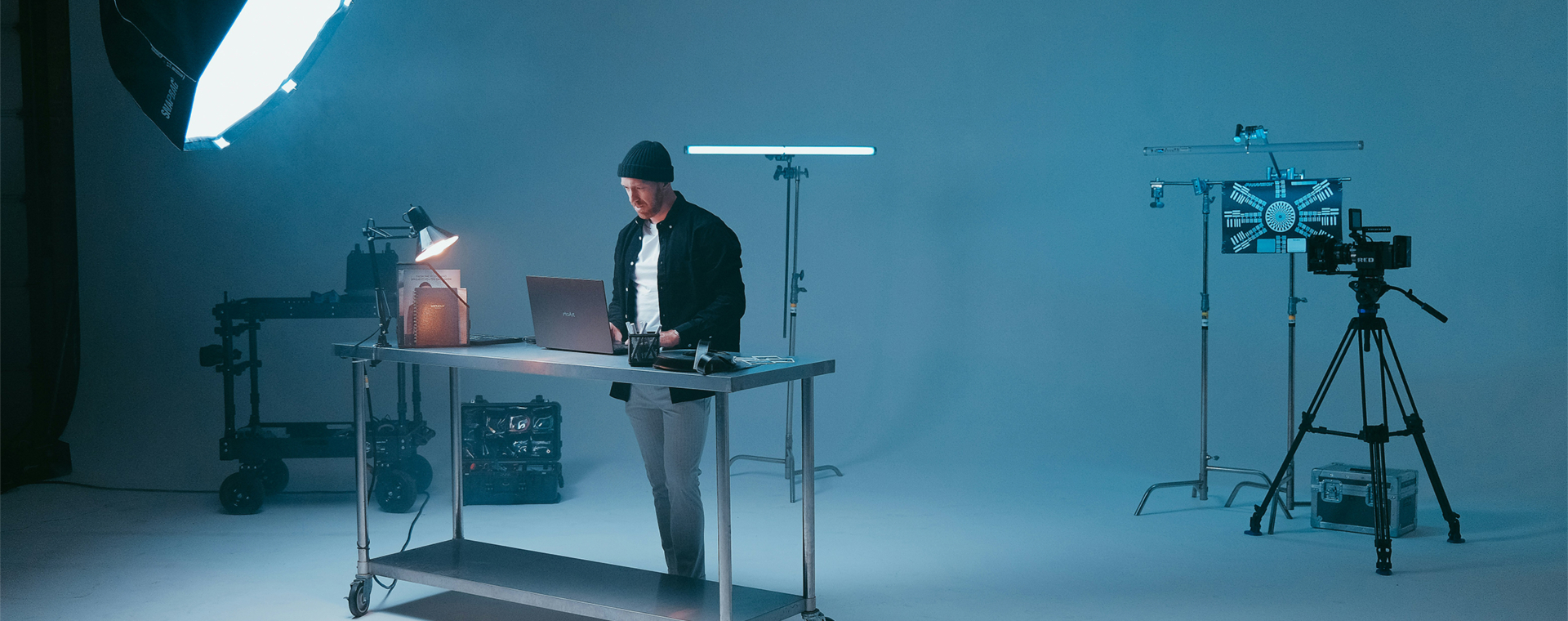
Figure 3: Indoor UAV experimental platform based on the CHINGMU MC4000 motion capture system
In the standing perching experiment, the UAV first took off from the ground and approached a target pole with a diameter of 70 mm. Once the center of the leg-claw aligned with the target axis, the UAV executed the perching action; after the mechanism formed stable contact with the target, the rotor power was turned off, and the BLCM achieved passive stable attachment.
In the hanging perching experiment, the UAV gradually approached a pole with a diameter of 30 mm from below the target. After the center of the foot aligned with and contacted the target, the toes actively closed, allowing the UAV to hang stably on the target structure. The experiment also verified that the BLCM can select the standing or hanging initial posture according to task requirements.
The research further conducted dynamic aerial grasping experiments. After taking off, the UAV hovered above the target, grasped it, lifted it to a height of approximately 1.5 m, and executed transportation, release, and safe landing, verifying the BLCM's aerial manipulation capability in the continuous process of hover-grasp-transport-release.
In addition to aerial flight experiments, the research also systematically examined the mechanism's grasping capability for different target shapes. The team selected 30 objects with different shapes, sizes, masses, and surface materials for experiments, ultimately successfully grasping 28 of them, resulting in a grasping success rate of approximately 93%.
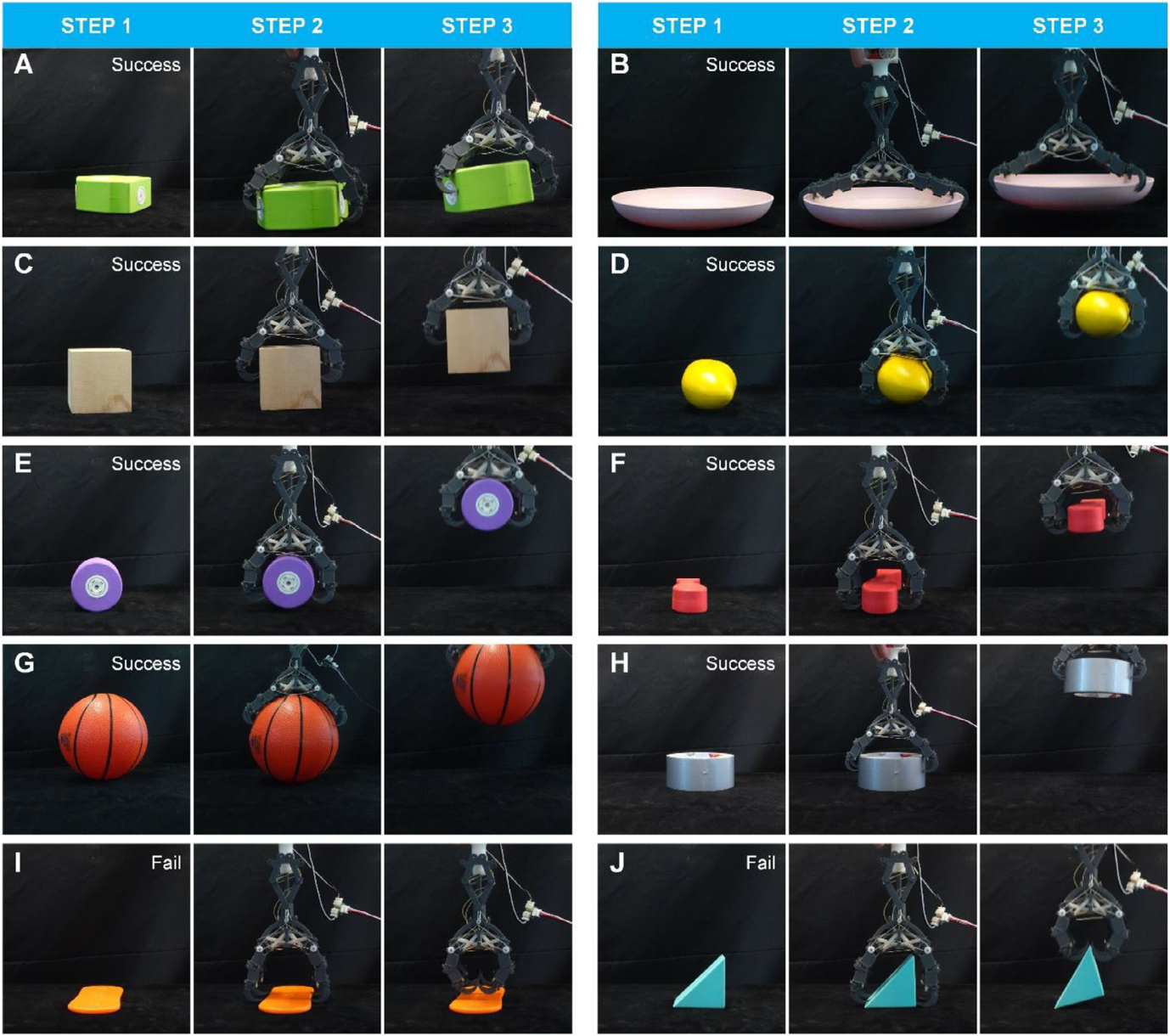
Figure 4: Grasping experiments of the BLCM on targets of different shapes and materials
Regarding perching performance, the research also conducted tests on poles of different diameters and inclination angles. The UAV was able to achieve stable perching on branches of varying thicknesses and further validated the mechanism's environmental adaptability on special surfaces such as inclined poles and slope edges.
Furthermore, the research optimized the power consumption during hanging perching. Experimental results showed that, while ensuring stable hanging, after optimizing the servo output torque to 1.2 kg·cm, the energy consumption of a complete grasping process was reduced from 33.52 J to 22.94 J, a decrease in energy loss of approximately 31.7%.
III. Experimental Results
This research proposed a bioinspired adaptive leg-claw mechanism (BLCM) for UAV complex environmental interaction tasks, combining avian hindlimb morphology, bat hanging perching methods, and flexible underactuated mechanism design to enable UAVs to gain robust perching and active grasping capabilities beyond traditional flight capabilities.
Supported by the high-precision indoor spatial positioning provided by the CHINGMU MC4000 motion capture system, the research team completed complete flight experiments including UAV standing perching, hanging perching, and dynamic aerial grasping. The motion capture system continuously acquired the UAV's spatial state at 120 Hz and fused it with the onboard IMU, providing reliable position feedback for stable hovering, target approach, and perching/grasping processes in GPS-denied environments.
Experimental results showed that the UAV equipped with the BLCM can stably attach to targets of different diameters and geometric shapes, achieve both standing and hanging perching modes, and adaptively grasp objects of different shapes. Among 30 different test targets, the system successfully grasped 28, with an overall success rate of approximately 93%; meanwhile, after torque optimization, the energy consumption associated with hanging perching was reduced by approximately 31.7%.
This research enables UAVs to go beyond merely "flying near the target" and further achieve "stopping, attaching, and grasping," providing a new technical pathway for tasks such as complex environmental monitoring, long-duration residency, target pickup and placement, and autonomous operation of aerial robots.
References:
[1] Tianyu Cheng, Shaokun Wang, Jiehan Zou, Guiwen Shi, Zhongxue Gan, I-Ming Chen, Guo-Niu Zhu. “Bioinspired Adaptive Leg-Claw Enables Robust Perching and Grasping for UAVs.” Advanced Science, 2026, 13: e23518.
Fudan University: Bioinspired Adaptive Leg-Claw Enables Robust Perching and Grasping for UAVs
Not just flying. Drones can now perch hang and...




+86-21-56472866 / 13310099680
1190 Nong METACINE (South Gate), Building 1, CHINGMU, Zhengtai Road,Baoshan District, Shanghai

Hot searches: Motion capture, Optical motion capture, Motion capture system robot, Motion capture, Bionic robot, Motion control, Gait analysis, Rehabilitation training action assessment, Animation production, Virtual idol live streaming, Expression capture, Virtual production, Pre-visualization, Performance capture