
2026/06/05

Shanghai, May 31 — CHINGMU hosted its “100 People Enter the Digital World Simultaneously” real-time motion capture challenge & digital motion showcase at the CHINGMU MCP Boundless Studio in Shanghai. AMD served as the lead computing partner. The event featured a live performance by 100 motion-capture actors, demonstrating the synergy of large-scale optical motion capture, AI computing, real-time digital character animation, and embodied AI.
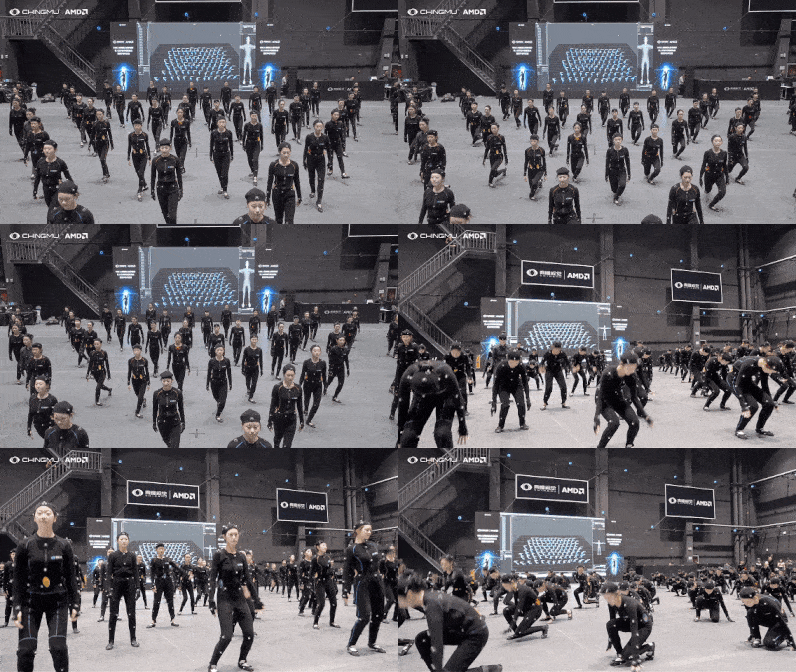
The entire challenge was witnessed and officially documented on-site by the Shanghai New Hongqiao Notary Public Office, which issued a notarial certificate attesting to the authenticity of all generated technical data.
The First Publicly Verified 100-Person Real-Time Motion Capture System
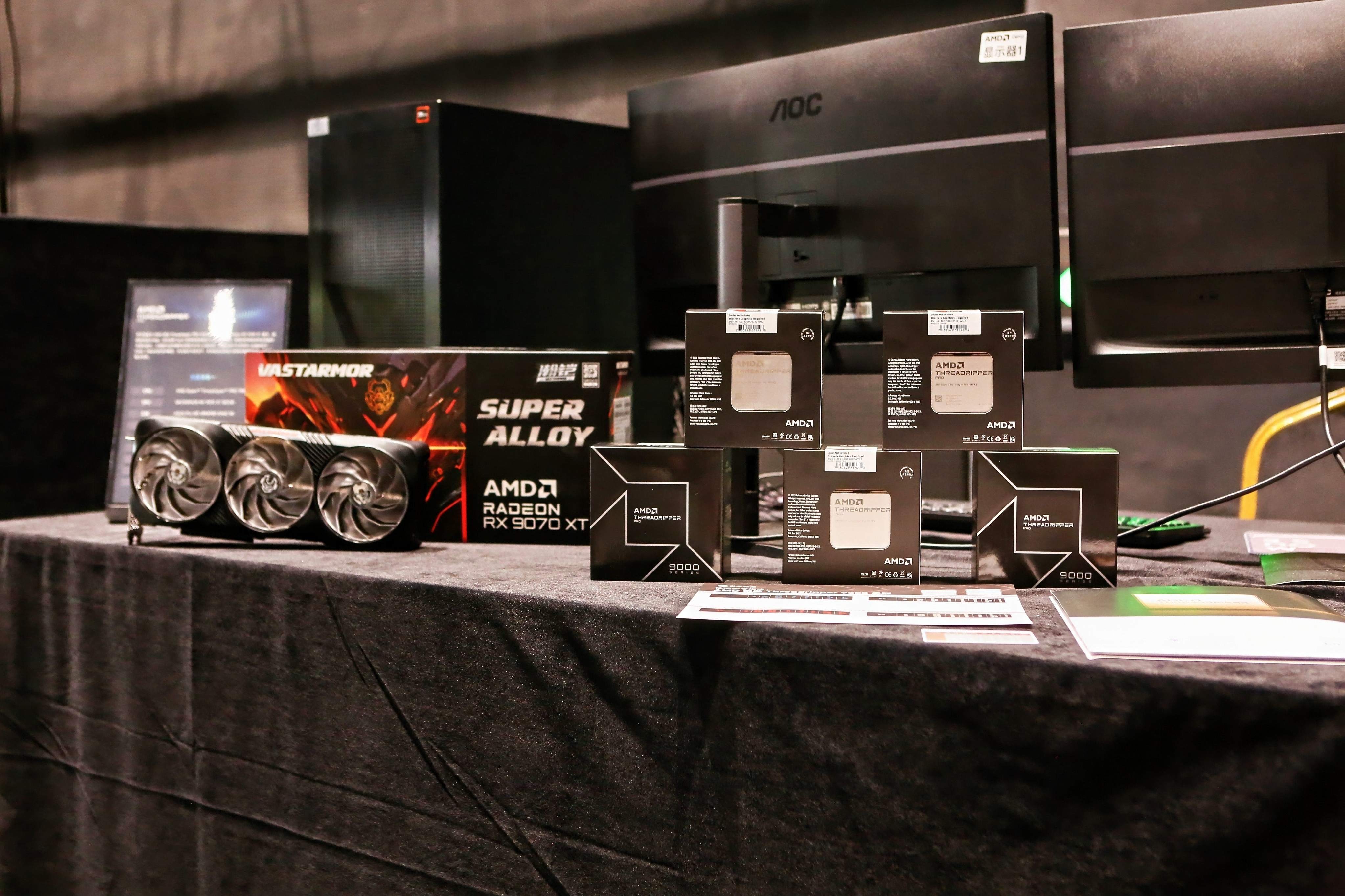
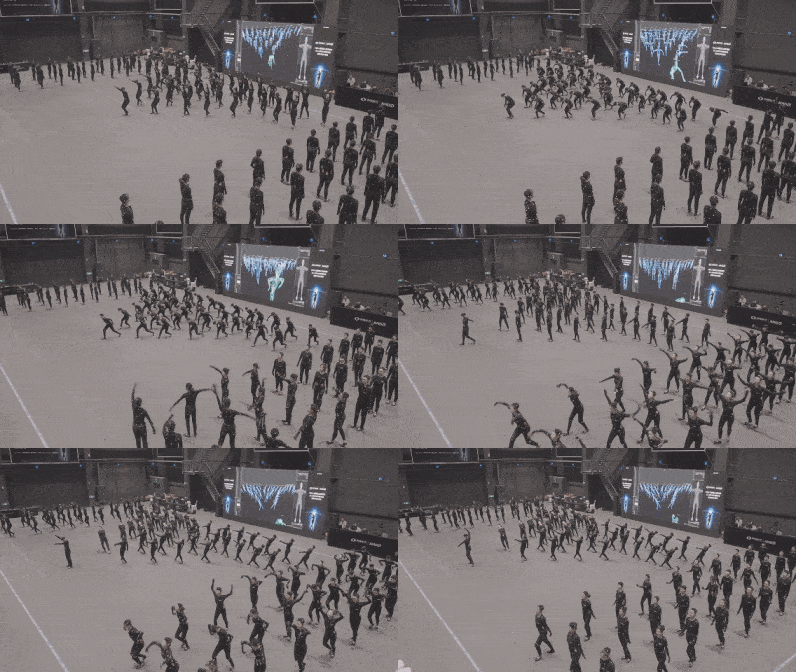
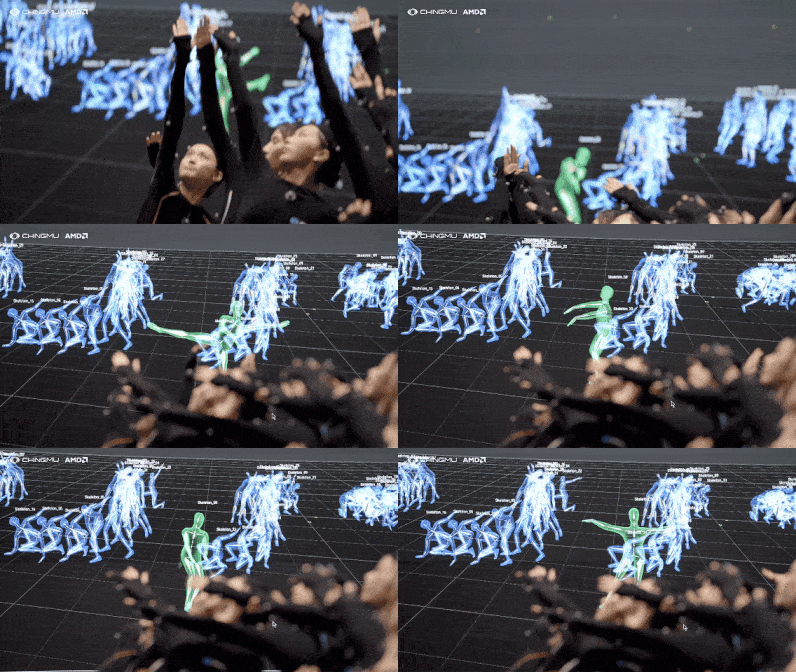
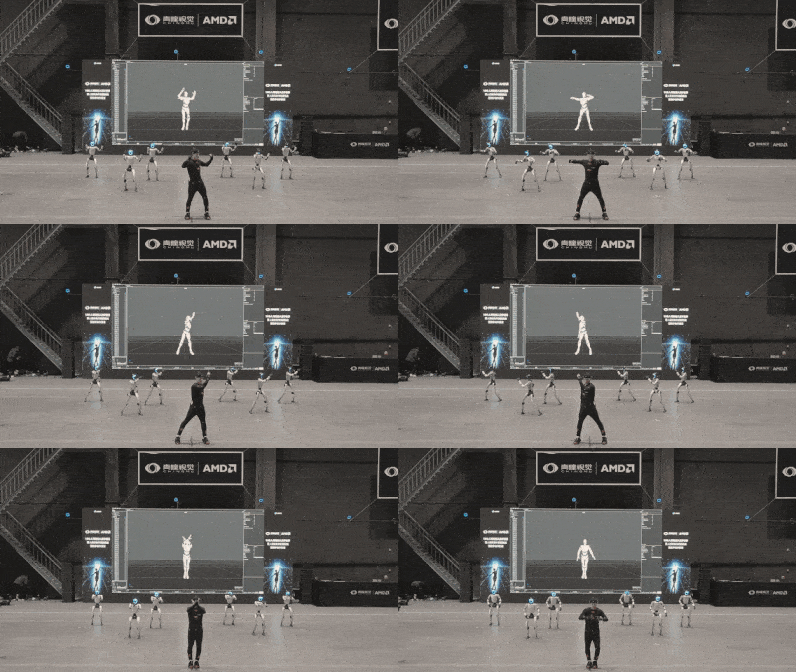
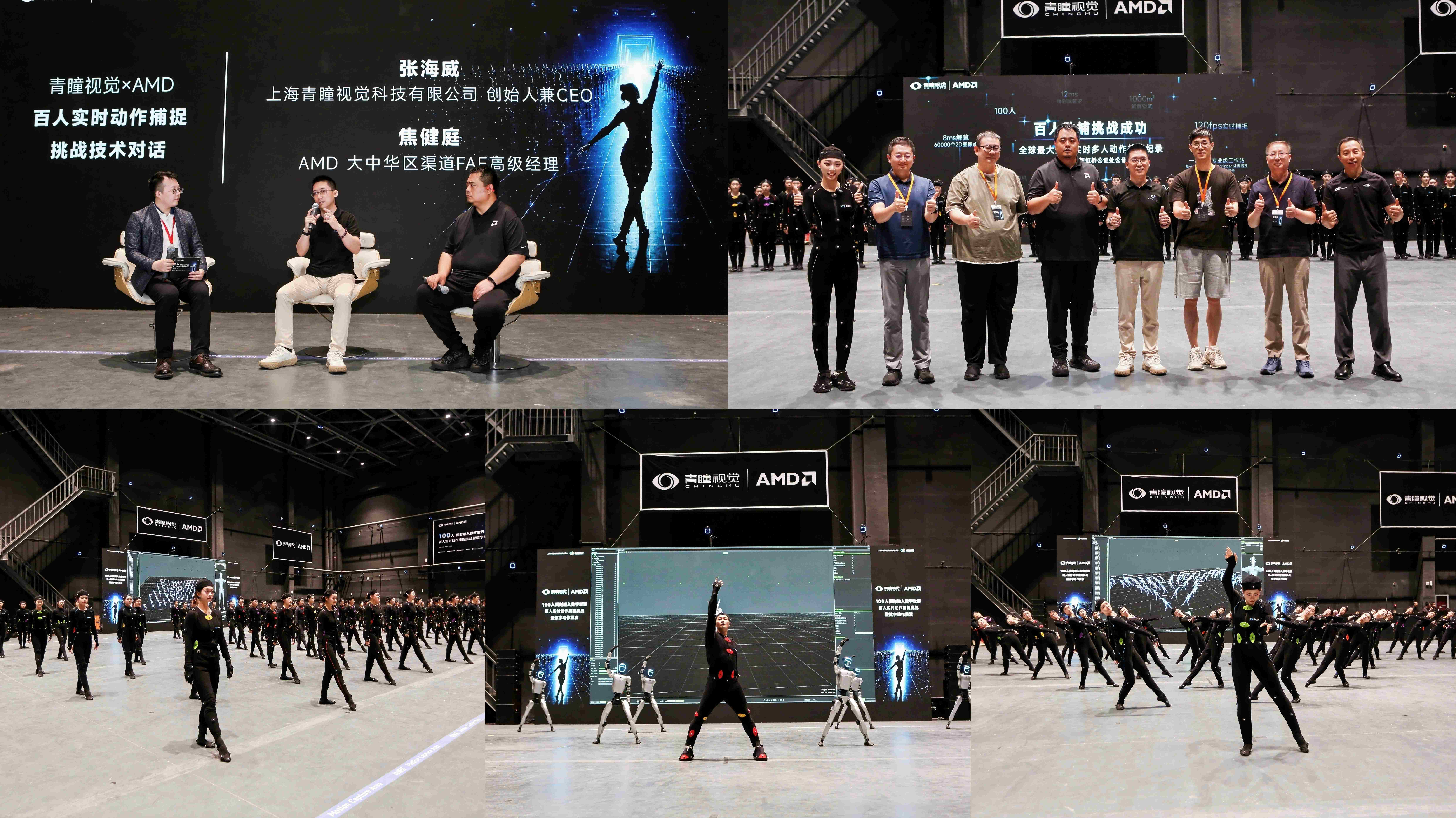
Inside a 1000㎡ capture space, 100 actors performed group movements. The system used 76 CHINGMU Kunpeng (K) Series K26 optical mocap cameras, together with a single high-performance workstation equipped with a 64-core AMD Ryzen Threadripper PRO 9985WX processor and an AMD Radeon RX 9070 XT graphics card (16GB VRAM). Operating at industrial-grade 120 fps, it captured ~5,300 markers across 100 actors, performing real-time 3D reconstruction, marker identification, and skeletal solving with an end-to-end latency under 12 ms. On-site large screens simultaneously showed live performance, real-time skeleton data, motion trajectories, and system status — visualizing how human motion enters the digital world in milliseconds.
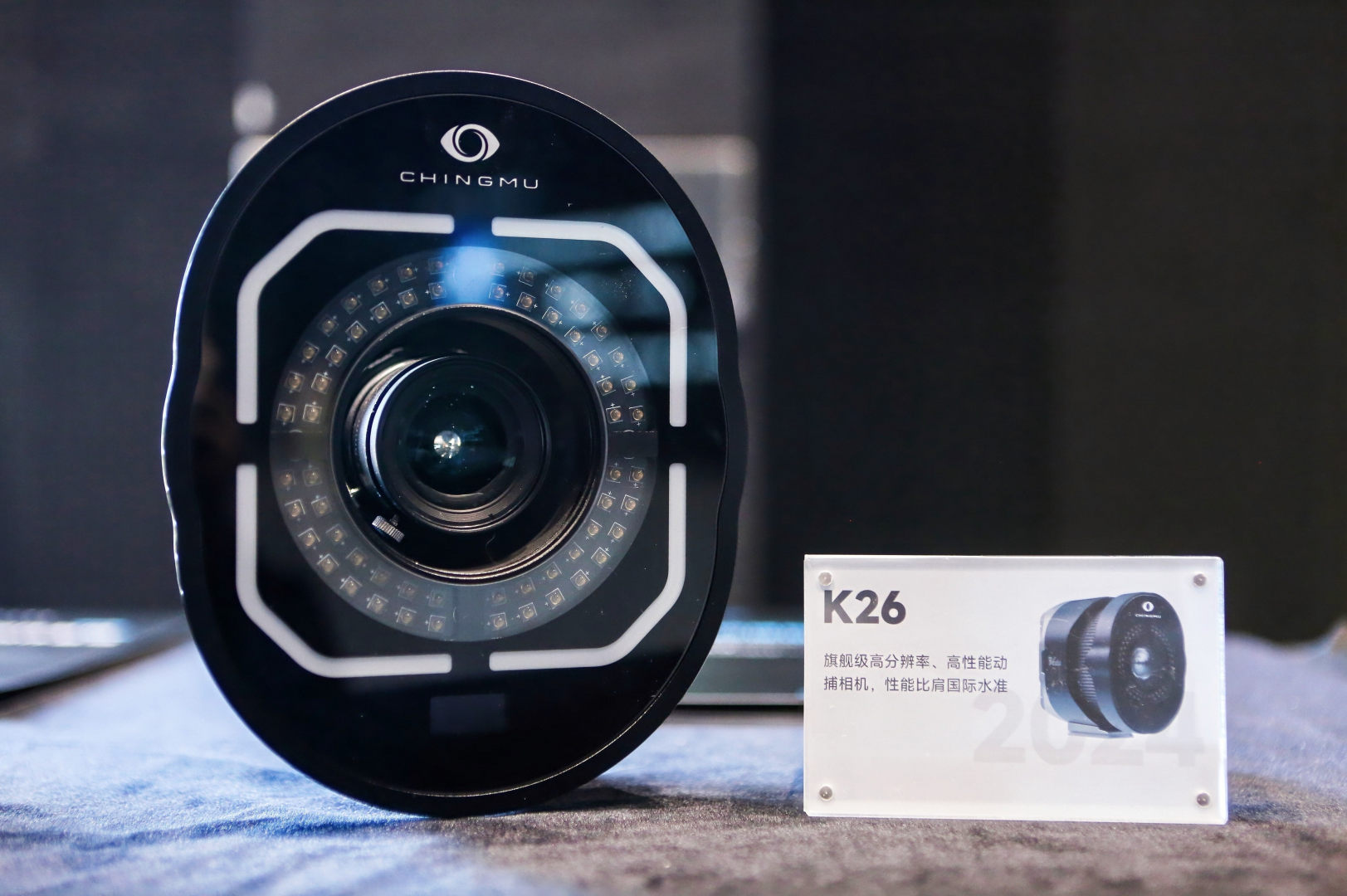
100-person motion capture
According to publicly available sources, the previous internationally certified record for real-time multi-person motion capture stood at 19 persons, while the highest publicly demonstrated scale in China was approximately 41 persons. This challenge pushed the scale to 100 persons for the first time—a 2.3-fold increase in participant count and an exponential leap in data volume—making it the largest publicly verified real-time multi-person motion capture achievement on record, and marking a new era of industrial-scale 100-person applications for global motion capture technology.
From Dozens to 100: The System-Level Challenges
Scaling real-time mocap from dozens to 100 people is not linear superposition, but a comprehensive test of multi-target recognition, occlusion handling, real-time solving, system sync, and long-term stable operation.
Exponential Data Explosion: The system processed roughly 60,000 2D image points from 76 cameras per frame, equating to 7.2 million 2D image points per second—all within an 8 ms single-frame window, while maintaining an end-to-end latency below 12 ms.
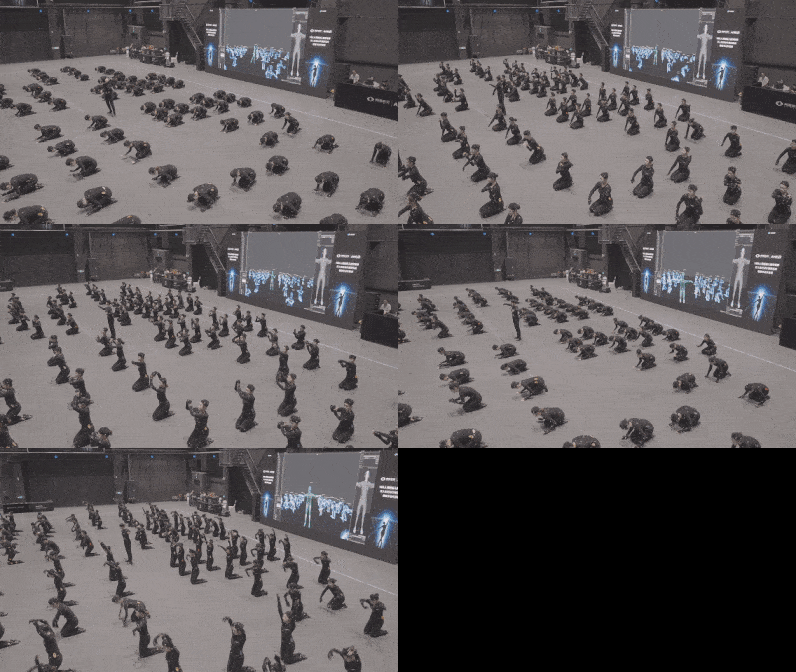
Occlusion & Identity Recognition: With 100 performers moving simultaneously, marker loss/re-acquisition, mis-assignment, and skeletal drift grow exponentially. Error correction must compete for compute resources within the real-time window.
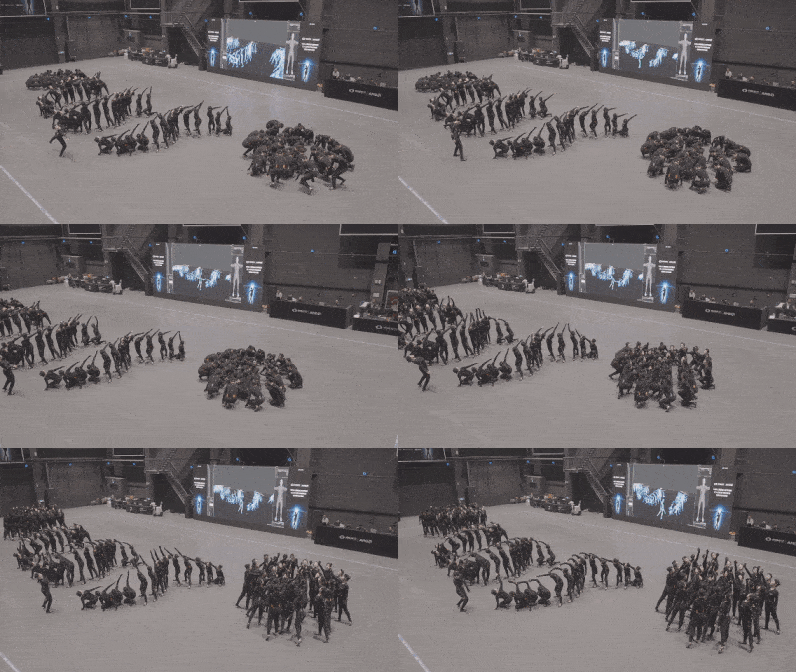
Stable End-to-End Operation: All 100 motion data streams must stay strictly synced. The system ran under heavy load for over one hour without crashes, frame drops, or memory leaks.
Coupled with high organizational costs and limited trial-and-error room for a 100-person team, these interconnected challenges make 100-person real-time mocap a recognized technical "no man's land."
System Synergy: Deep Integration of CHINGMU and AMD
The success came from collaborative operation of optical mocap systems, real-time algorithms, on-site engineering, and high-performance computing. CHINGMU handled system design and core algorithm R&D; AMD provided compute power for high-concurrency data processing and real-time visualization.
CHINGMU redesigned core algorithms for 100-person high-concurrency scenarios, improving key algorithmic efficiency by 300%+, and introduced a differentiated marker placement scheme to optimize large-scale marker recognition and identity stability.
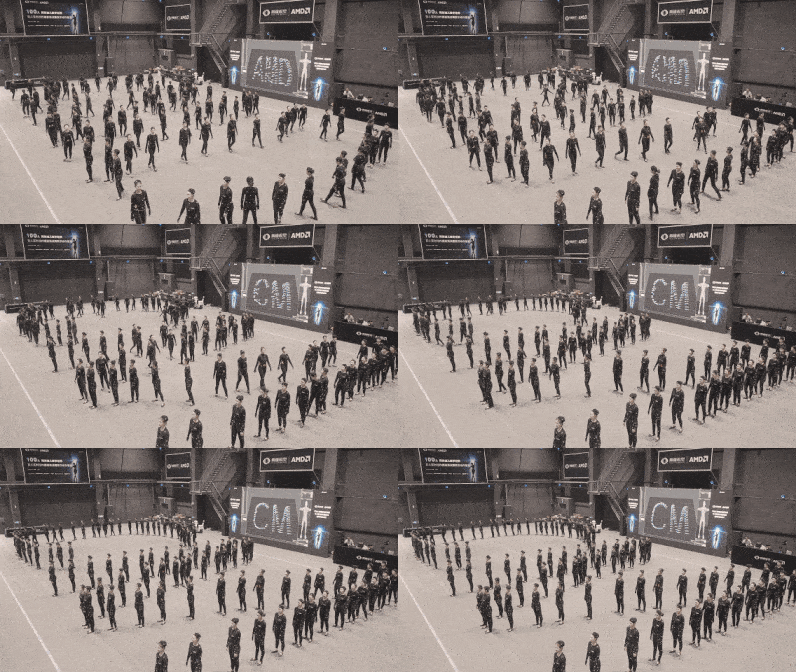
AMD's CPU (64-core Threadripper PRO 9985WX) handles high-concurrency thread scheduling, motion solving, data reconstruction, and multi-actor sync. The GPU (Radeon RX 9070 XT) handles real-time rendering of the mocap software CMAvatar, isolating compute from rendering.
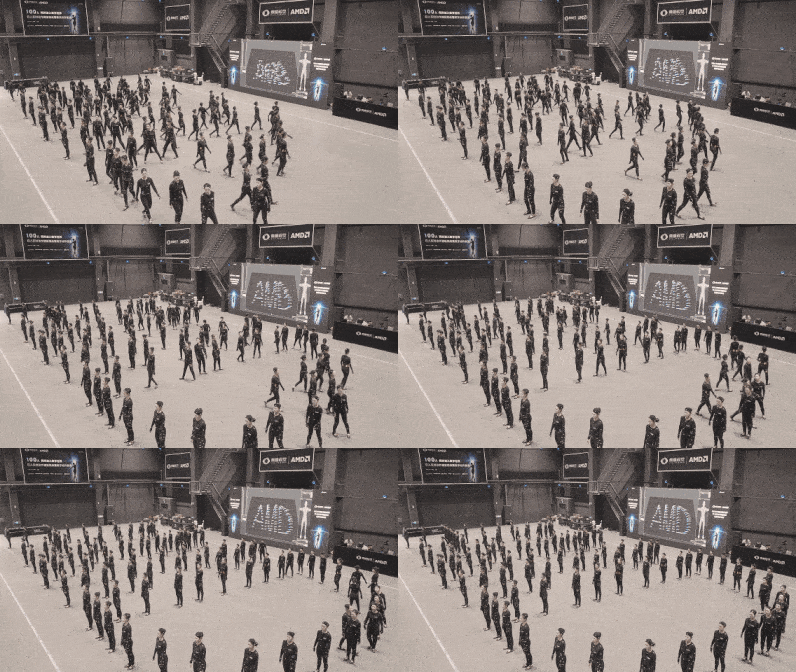
Through joint optimization of BIOS config, thread scheduling, and data paths, both teams achieved a 20% overall system performance boost and significantly reduced latency — enabling stable millisecond-level operation at 100-person scale.
Where Tech Meets Art: A Watchable Digital Motion Showcase
The event also featured a digital motion showcase. Professional mocap actress Xixiyu SAKANA opened with an interactive "Light Up the Digital World" performance, leading into the 100-person group capture.
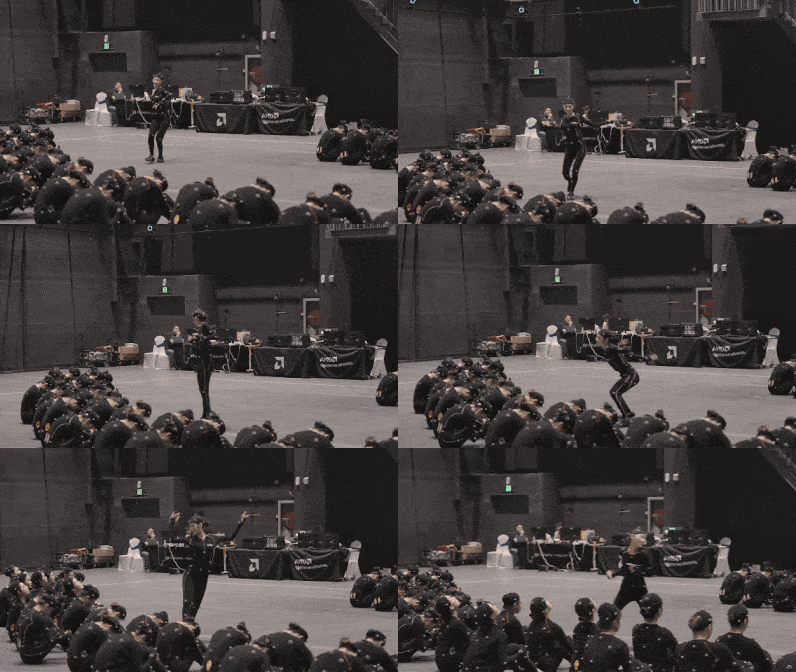
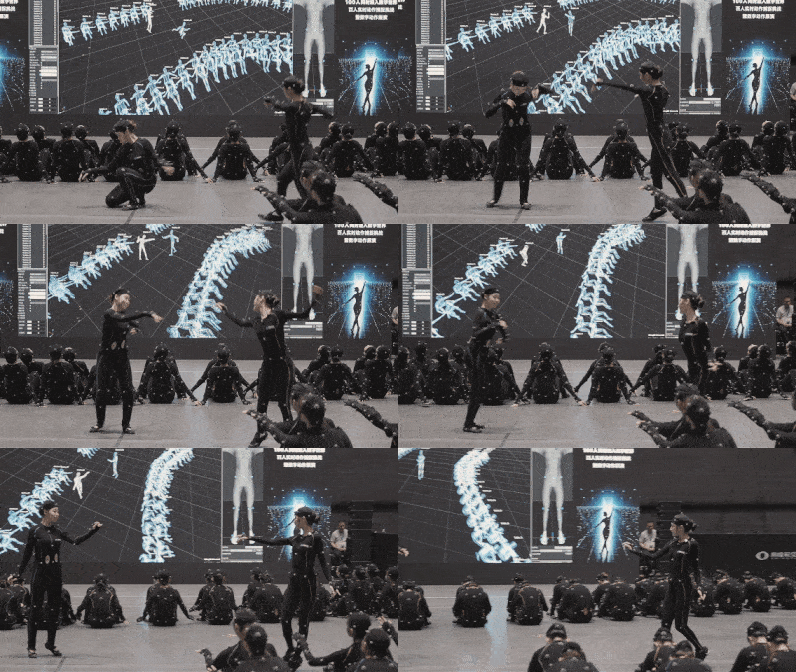
One hundred dancers from Shanghai Film Art Academy, wearing mocap suits, performed the original dance "Light of Shanghai" as the core challenge — delivering smooth, stable, and visually striking motion data, transforming raw tech data into vivid artistic expression. On-site screens displayed live dance, real-time skeleton data, and system status, clearly showing how real movement becomes computable, reusable, and drivable digital assets.
Embodied AI Demo: One mocap actor used CHINGMU's system to teleoperate 6 Unitree G1 robots in a synchronized dance, together with Westlake Robot's teleop platform. This demonstrated the "human motion into robot body" pathway, highlighting how high-quality motion data powers robot control, embodied AI training, and human-robot collaboration.
From Technology Breakthrough to Industry Enablement
The core value of this challenge goes beyond breaking the world record. It fully verifies the engineering capability of motion capture systems for large-space, high-concurrency, and complex interaction scenarios, opening new application boundaries for the digital economy and embodied intelligence industries. This capability can deeply empower digital content production fields such as group animation, virtual production and digital performance, while enabling applications including robot teleoperation, humanoid robot motion learning, and embodied intelligence dataset construction, providing key data support for intelligent systems to understand real-world movements.
This is not only a technological milestone but also a validation of CHINGMU's ability to build large-scale real-time motion data infrastructure for the entire industry. The 100-person scale is by no means the end. As the capture space, camera arrays, and computing platforms continue to evolve, real-time multi-person motion capture has vast potential to scale even further. Moving forward, CHINGMU will continue to advance high-precision motion capture and multi-modal data acquisition, building a high-precision motion data infrastructure that connects the physical world, the digital world, and the robotics industry, and driving the development of the global digital intelligence industry.
As a landmark tech event of the Information Consumption Festival 2026, this showcase provides a highly shareable visualization model for Shanghai's industrial integration in ultra-HD video, AI computing, digital content, and embodied AI — helping build an innovation hub where digital technology meets real economy. More importantly, this challenge, built on fully self-developed core technology, marks a critical leap for China's mocap industry from "domestic substitution" to "global leadership," proving that China's self-developed optical mocap systems have reached world-class status and are reshaping the global mocap landscape.
In the era of embodied intelligence, human motion data is becoming the core production asset driving intelligent system evolution. Moving forward, CHINGMU will continue to advance high-precision mocap and multimodal data acquisition, building a high-precision motion data infrastructure that connects the physical world, the digital world, and the robotics industry — and driving the global digital intelligence industry forward.
How Does CHINGMU Give Drones a "Precise Ruler" in a 6,400 m² Space?
CHINGMU and NUDT have built the industry’s lar...




+86-21-56472866 / 13310099680
1190 Nong METACINE (South Gate), Building 1, CHINGMU, Zhengtai Road,Baoshan District, Shanghai

Hot searches: Motion capture, Optical motion capture, Motion capture system robot, Motion capture, Bionic robot, Motion control, Gait analysis, Rehabilitation training action assessment, Animation production, Virtual idol live streaming, Expression capture, Virtual production, Pre-visualization, Performance capture