
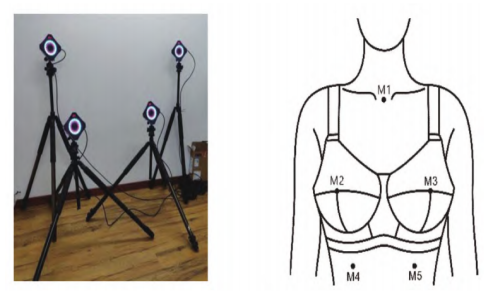
The female breast lacks the structural support of muscle and bone, relying primarily on the suspensory ligaments as its principal load-bearing mechanism, supplemented by the superficial fascia and overlying skin. During physical activity, external support is required to lift the breast upward and inward to a position of minimal internal loading — reducing motion-induced discomfort and mitigating progressive structural changes such as breast ptosis. This anti-vibration function represents a defining performance criterion of the sports bra.
Prior research establishes that investigation into the anti-vibration mechanics of sports bras should center on the biomechanical interaction between the breast-bra system. Future studies are directed toward quantifying the relationships between fabric parameters, structural parameters, and breast displacement — providing a rigorous, evidence-based foundation for the functional optimization of sports bra design.
Within this research context, Associate Professor Chen Xiaona of Shanghai University of Engineering Science, together with team member Sheng Xinyang, conducted a study examining the influence of fabric elastic modulus on the anti-vibration performance of sports bras. The project received funding from the National Natural Science Foundation of China and was designated an open research topic by the Key Laboratory of Modern Clothing Design and Technology, Ministry of Education, at Donghua University.
CHINGMU provided the research team with dual MC Series optical motion capture solutions — passive and active marker configurations — to meet the demands of sub-millimeter positional tracking on soft tissue targets. The active marker system maintained consistent marker ID assignment throughout motion sequences, enabling researchers to accurately correlate each marker's spatial trajectory across the full duration of each trial. In response to the team's specific experimental requirements, CHINGMU developed a suite of custom software features, including TRC-format marker data export, allowing researchers to collect complete experimental datasets in a single continuous session — streamlining the experimental workflow and enhancing both efficiency and data precision.
Prior to adopting the CHINGMU solution, the research group had attempted to conduct the study using a 12-camera system from an international manufacturer. This approach not only incurred substantially higher costs, but also failed to meet the data quality requirements of the experimental protocol. CHINGMU effectively resolved both the technical and budgetary challenges facing the team, enabling successful completion of the research program within a demanding project timeline.


+86-21-56472866 / 13310099680
1190 Nong METACINE (South Gate), Building 1, CHINGMU, Zhengtai Road,Baoshan District, Shanghai

Hot searches: Motion capture, Optical motion capture, Motion capture system robot, Motion capture, Bionic robot, Motion control, Gait analysis, Rehabilitation training action assessment, Animation production, Virtual idol live streaming, Expression capture, Virtual production, Pre-visualization, Performance capture