
2023/02/20
BY ANDREW HOUSMAN
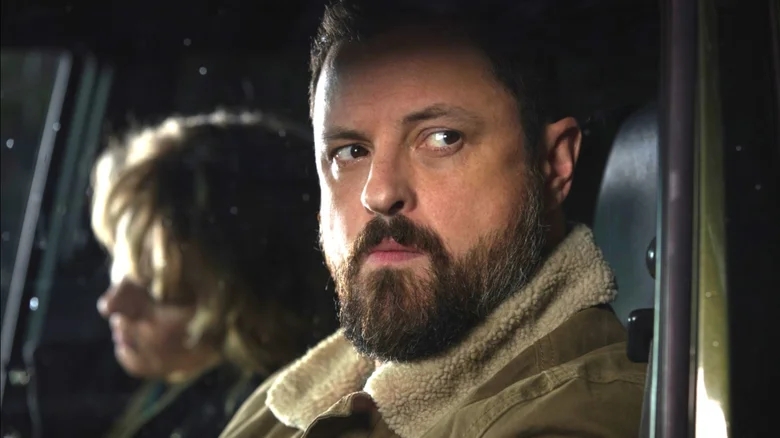
Any digital artist experienced with motion capture knows a successful session hinges on the performer’s acting. Since motion capture rose to popularity at the turn of the millennium, Donavon Stinson has witnessed and taken part in its evolution, working on numerous films and video games including District 9, The Lord of the Rings video games and the Mass Effect franchise. His live‑action credits include Illusory, the zombie comedy Dead Shack from director Colin Minihan of Grave Encounters, and Nickelodeon’s Are You Afraid of the Dark?.
I had the chance to speak with Stinson about his career: how much work goes into a motion capture performance, how filmmakers and creative directors collaborate with actors on mo-cap shoots, and how the technology keeps advancing. The conversation makes it clear that motion capture performance is far more than ping‑pong balls and spandex suits.
“EA and game studios started hearing about me”
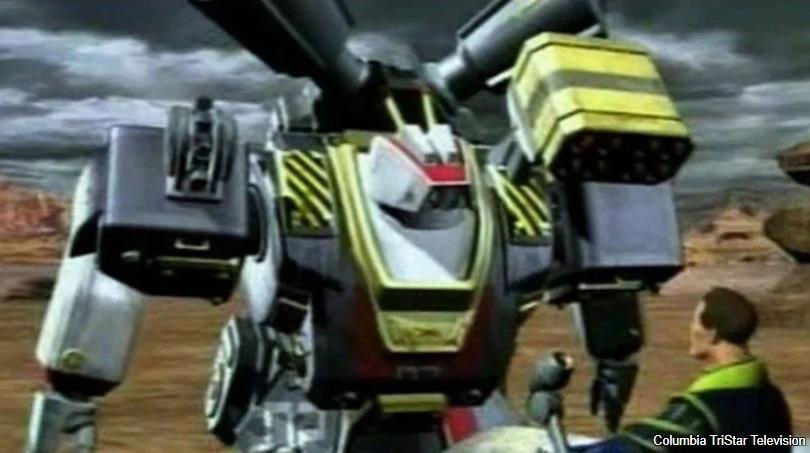
Did you get into acting with motion capture in mind from the start, or did you follow a traditional acting path? I moved to Vancouver in 1997, not knowing if I wanted to pursue acting or anything like that. I worked at a café. A friend of mine worked at Mainframe Entertainment — famous for ReBoot, one of the earliest 3D animated series — and they were holding auditions for a show called Heavy Gear. I’d never taken acting classes. I had some gymnastics and combat training.
I had no agent, and my friend said, “Just go for it and see what happens.” At the time I was making short films and messing around with my roommates, who were aspiring actors. I walked in, there was a light projecting my silhouette onto a white sheet behind me. Luke Carroll was there, along with Kimani Ray Smith, a director and stunt coordinator. He worked on Snake Eyes and now directs many films. He was acting back then too, and he’s a dwarf actor; he appeared in Rumble in the Bronx. Anyway, he used to be my neighbour and remembered me. I auditioned and landed the role for roughly 47 episodes. I remember calling my parents: “You won’t believe this, man. These guys want to pay me $500 a day to jump around like a giant robot.”
Then more work snowballed from there. Heavy Gear ran for about 46 or 47 episodes, something like that. Next I worked on a show called Action Man, playing Action Man, followed by Max Steel. We shot one season of the Spider‑Man animated series. I played both Peter Parker and Spider‑Man. It just kept going. But then EA and game studios started hearing about me, and I began working with EA around 2002 or 2003.
I think in some ways I flew under the radar. Being able to play many different characters in a single day helped me. To this day, they still bring me in because I can slip into six different roles. I worked on a Marvel project where I played everyone from the Hulk to Wolverine, Deadpool, Spider‑Man and Iron Man. Years of experience and this volume of work kept opening more doors.
It’s a fascinating field, though. For film and television, obviously you see your own face and hear your voice; what you see on screen is you. With motion capture, then and now, who knows who you are? All you see is a digital body. Back in the early 2000s, the UCP union didn’t even know how to classify motion capture actors. They put us under the puppetry category because they said, “I don’t get it. You don’t hear his voice, it’s not his face, only his body.” So they said, “We’ll slot him into this category.” It wasn’t until [Andy] Serkis really put it on the map with Gollum that people thought, “Wow, look at this thing called motion capture.”
“It is now recognised as another form of performance”
Motion capture technology keeps evolving at a fairly rapid pace. Have you noticed how filmmakers’ approach to the craft has shifted over the years?
Absolutely. It has kept evolving. Over the past decade, Vicon systems, many camera rigs used by numerous studios, head rigs and the HMCs that actors wear now. I remember The Lord of the Rings. We worked on The Two Towers and The Return of the King tie‑in games when the films were coming out. It was really cool because we got to see the Mouth of Sauron before anyone else. We were like, “Oh my god, look at this.” Again, Kimani and several other actors would play dozens of different roles. I played Gollum, Legolas and Gandalf, while Kimani played Aragorn plus various human characters, trolls and orcs — lots of orcs.
We then worked on another title, The Lord of the Rings: The Third Age. That was our first introduction to facial capture, at EA. Back then markers were often physical attachments. Now they just paint dots, applying makeup with black dots all over your face. Back then, man, they glued tiny markers everywhere. The technology hadn’t advanced like today’s cameras and systems, so you needed huge numbers of markers. They went around your eyebrows and stuck out. They were on your eyelashes, lips and nose. If you wiped your face even slightly, markers would pop off, and we’d have to stop while they reattached them.
So we’ve moved from those glued‑on markers dedicated to facial capture to what we have now. I just finished a project I’m not allowed to talk about. They can paint markers onto my face in five minutes, you get your face mapped, and you’re ready to go, with your suit and everything obviously prepped. It’s changed massively. It’s easier for us performers and far less intrusive, in my opinion.
Marker technology has transformed. Back when we started Heavy Gear and other animations, even at EA, markers were like ping‑pong balls. Saturday Night Live used to joke about motion capture showing some guy in a green suit covered in ping‑pong markers. Those markers were huge, hard as rocks. We were doing insane stunts, shooting fight sequences, sometimes eight hours a day choreographing combat, performing moves and stunts, getting launched off objects and landing on them. Sometimes I looked like I was covered head‑to‑toe in cupping dots. Later the technology evolved, markers got smaller and suits changed.
We used to wear football helmets for our head rigs and head markers — they got so sweaty, hot and uncomfortable, especially when performing heavy stunts. Now, if we’re not doing full performance capture, it’s just a pair of glasses. Back then they were pushing the limits of the technology. Having three or four people inside one capture volume was already a stretch, and sometimes the system would crash. Now I work at Beyond Studios, a local motion capture studio. They can handle up to ten performers at once, many studios can. I think most can support ten. EA and Ubisoft can do that too.
So things have changed drastically. Obviously for camera capture you cannot wear anything reflective, like Nike logos or similar branding. But I remember the first time we saw real‑time preview, I believe it was during The Lord of the Rings. They mounted a camera inside the volume, and we could see ourselves on actual monitors. Back then the detail was nowhere near what we have now. We recently finished a newly released game. Once gameplay capture wraps, your character model is ready right there. It’s incredibly fast now. The workflow is smooth. You can easily say: “Alright, this guy is a troll. A massive troll. Boom, attach the model to the skeleton and done. There he is.”





+86-21-56472866 / 13310099680
1190 Nong METACINE (South Gate), Building 1, CHINGMU, Zhengtai Road,Baoshan District, Shanghai

Hot searches: Motion capture, Optical motion capture, Motion capture system robot, Motion capture, Bionic robot, Motion control, Gait analysis, Rehabilitation training action assessment, Animation production, Virtual idol live streaming, Expression capture, Virtual production, Pre-visualization, Performance capture